
More and more people are foregoing the services of a general contractor and building their homes themselves. It’s a long-term project that requires one to partake in training and be properly informed in regard to everything related to home building.
Admittedly, there’s a sizeable difference between acquired theoretical knowledge and practical, hands-on, on-site experience. Between fatigue, stress, and managing unforeseen circumstances, be ready to jump over a few hurdles along the way. However, many are able to bring this type of project to fruition, so why couldn’t you?
Benefits of Building Your Own Home

Personal satisfaction
As the saying goes, “If you want something done right, do it yourself.” As a matter of fact, a lot of people follow through with this quote and end up building their homes. Personal satisfaction does appear to be one of the main benefits. For many, it represents the accomplishment of a lifetime, one which they’ll remember each and every step of the construction project since they were at the epicentre of the action.
Prior to successfully completing a project, you’ll surely be faced with a few obstacles such as obtaining a mortgage loan, managing work-life balance or last-minute problems and unforeseen circumstances.
One thing is for sure: When you’re going to be coming up on the last leg of your project, you’ll be stronger and more confident. More so, your know-how and experience in the construction field will be, without a doubt, greater.

Having a uniquely-designed house
Building your own home has a key advantage and it presents itself as the possibility to make decisions at every turn during your home’s construction process. You’ll be able to take your expectations and turn them into reality in terms of construction methods, materials used, and a lot more aspects that would present as hardships if you were dealing with a general contractor.
That way, you can build a house that’ll stand out from neighbouring homes due to its unique design. However, you do need to acquire the right information with reference to municipal by-laws so as not to infringe any regulations regarding new construction.
Check out this article to know more about regulations pertaining to building your own home. (French only)

DIY-related savings
Building your own house means paying for construction materials, but it also means you’re saving greatly in terms of labour, given that you’re doing the work yourself. These are significant savings, especially when considering that the cost related to a contractor-built house is around $180 and $260 per square foot, as opposed to $120 when self-built. Furthermore, a general contractor will charge an additional 5% to 10% to cover any fees related to potential risks.
Savings made can allow you to pay back your mortgage loan faster, or to invest in pricier and eco-friendly materials, a more efficient heating or air conditioning system, or better yet, a high-performing water management system.
Want more information regarding the related costs? Check out our article Planning Your Budget for Your Self-Build Project.
Eco-friendly factor
Most people who want to build their homes do it as a green initiative to better control the process unfolding on-site, such as waste management, water and energy use during the project, but also to ensure that the materials used are eco-friendly and efficient.
Looking to build an eco-friendly house? Check out our article Things to Know to Build an Ecological House.
Downsides of Building Your House

Hardships of obtaining a mortgage loan
One of the main constraints related to such a project is without a doubt the difficult process of obtaining a mortgage loan. Given that the building process won’t be carried out by a general contractor, most banks are reluctant to the idea of loaning you money.
Rest assured, you’ll still be able to obtain a loan, but the sum will be significantly less than it would’ve been if your house was being built by a professional. Besides, chances are that the whole sum of the loan won’t be granted to you at the beginning stages of the project, but gradually provided based on the project’s progress.

Time and money investment
To successfully complete a self-build project requires one to take part in specific training programs since no municipality will allow you to erect a home if you don’t have the prerequisite skills to do so. As such, it means investing a significant amount of time and money in information research and obtaining permits.
This process is highly regulated, and the research and investigative work will be quite significant during the planning stages of the project. The end goal is to wholly respect and abide by your municipality’s construction code, at the risk of having to alter your plans last minute.

Stress caused by the unexpected
Unforeseen events are par for the course in the construction industry. They’re not always linked to bad planning, but a matter of random circumstances. These incidentals can be related to a delay in material delivery, order error, or others. A general contractor will have enough experience to properly manage such problems. However, if you’re starting out with this sort of venture, it’s highly likely that a situation like such might result in a lot of daily stress on your end.
Respecting deadlines will most likely be the biggest challenge when it comes to building your house. This can be all the more stressful if the progress of the work is contingent on obtaining financing from your bank.

Physical strain
Self-building your home requires one to be physically fit, hence the value in physically preparing yourself prior to undertaking this project. Construction professionals are accustomed to hard labour, however, you risk lacking stamina if you’re not in good shape.
If your family and friends help you with the project, they must also plan on having to help lift the framework, manoeuvre wheelbarrows or carry heavy loads of wood planks.
Your personal and professional life will suffer
To no surprise, this consists of an overwhelming project. It can become quite arduous to partake in familial and professional obligations whilst working on the building site. Based on estimates, you should work between 2,000 to 5,000 hours on a self-build project to see it through. Otherwise, the project may start to wear on you.
Summary of the Pros and Cons of a Self-Build Project
Pros | Cons |
1) Personal satisfaction | 1) The hardest part is obtaining a mortgage loan: The sum could be less significant and be handed out in several installments |
2) Have a house that’s designed according to your needs | 2) Money and time investment: Partaking in numerous training, obtaining permits, and knowledge about regulations |
3) Save money: You could save between $50 and $70 per square foot | 3) Stress caused by unforeseen circumstances: could be caused at random, by delays in material delivery, or due to other reasons |
4) Possibility of building a green home with eco-friendly materials | 4) Fatigue: The work demands a certain physical stamina |
5) Less free time: A self-building project is especially overwhelming |
Get 3 quotes for your DIY home-building project
RenoQuotes.com can help you get quotes for your DIY home-building project. By submitting your project, we’ll put you in contact with top-rated contractors. Fill in the form on the homepage (it only takes a few minutes), and you will get estimates from trusted professionals.
Dial 1-844 828-1588 to speak with one of our customer service representatives.
Looking for something else?
Related articles
The latest industry news, interviews, technologies, and resources.
Cynthia Pigeon
•12 Jun 2026
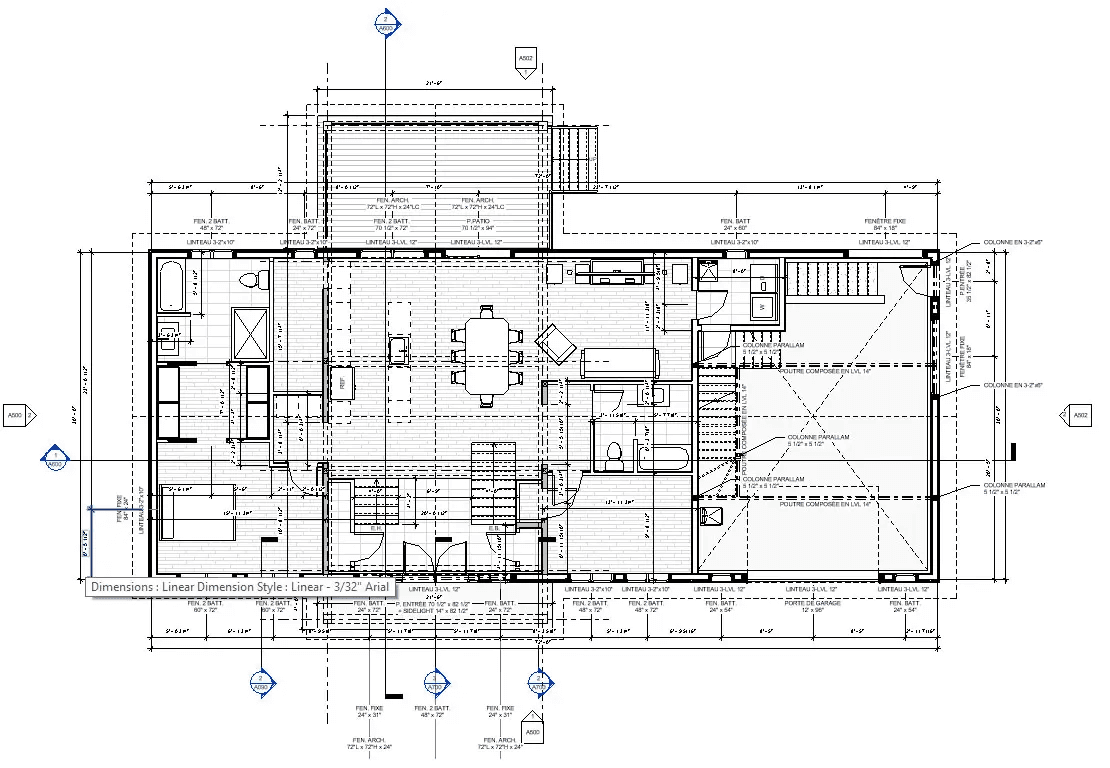
Whether you are planning to build your dream home, complete a major residential addition, or carry out a major renovation to optimize your space, the design plan stage is the foundation of your project’s success. In Quebec, many homeowners, real estate investors, and self-builders ask the same question: How much should you budget for the services of a professional builder?

Editorial Team
•08 Nov 2023
Hello, and welcome back to our monthly recap of the best articles about interior design, home decor and renovations found on the internet! As spooky October sadly comes to an end, it’s time to look back at the past weeks and search for some interesting reading content for you, our readers.
Editorial Team
•11 Nov 2023
During the learning stages of your professional career, meant for you to acquire the necessary skills to carry out your chosen trade in the most competent of ways, you’ll work with a journeyperson.
Editorial Team
•17 Dec 2024
Your garage door opening and closing on its own is a serious luxury. If yourself or a family member is dealing with reduced mobility, or if you’re just sick of opening and closing the door every time you leave your house or return home, it's recommended that you install an electric garage door.