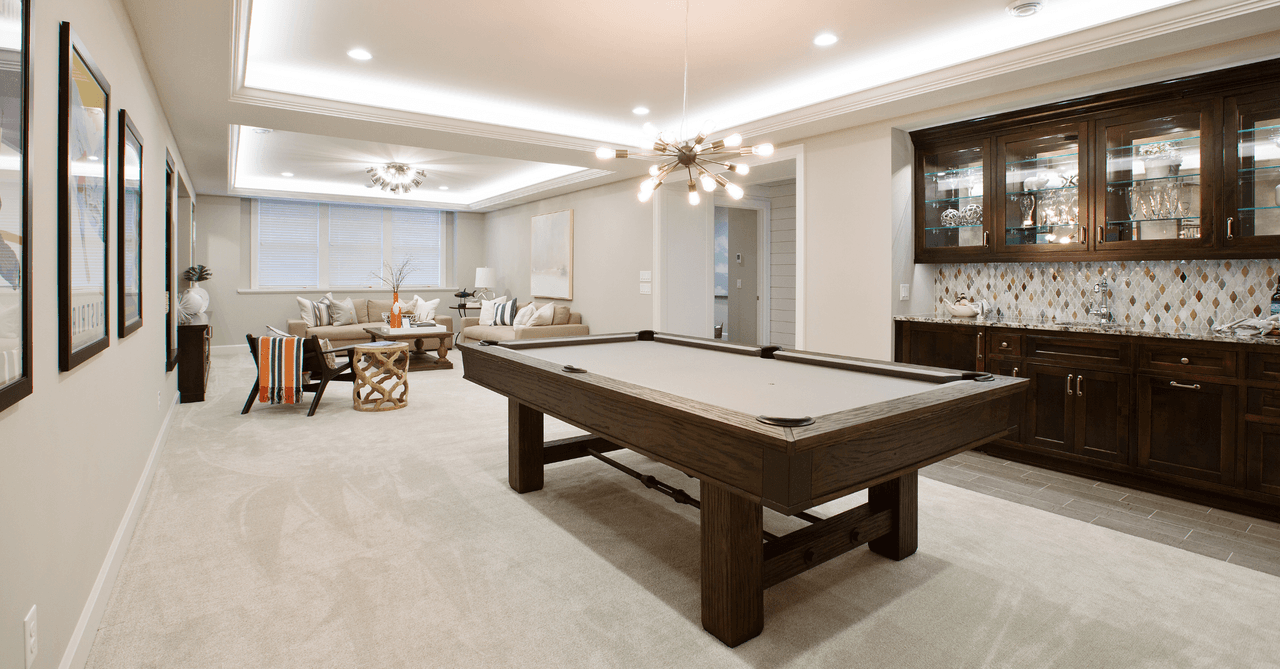
Are you planning on renovating or building a basement, and have some questions about ceiling heights? Keep reading to get just the information you are looking for!
What is the minimum basement ceiling height in Canada?
Source: Canva
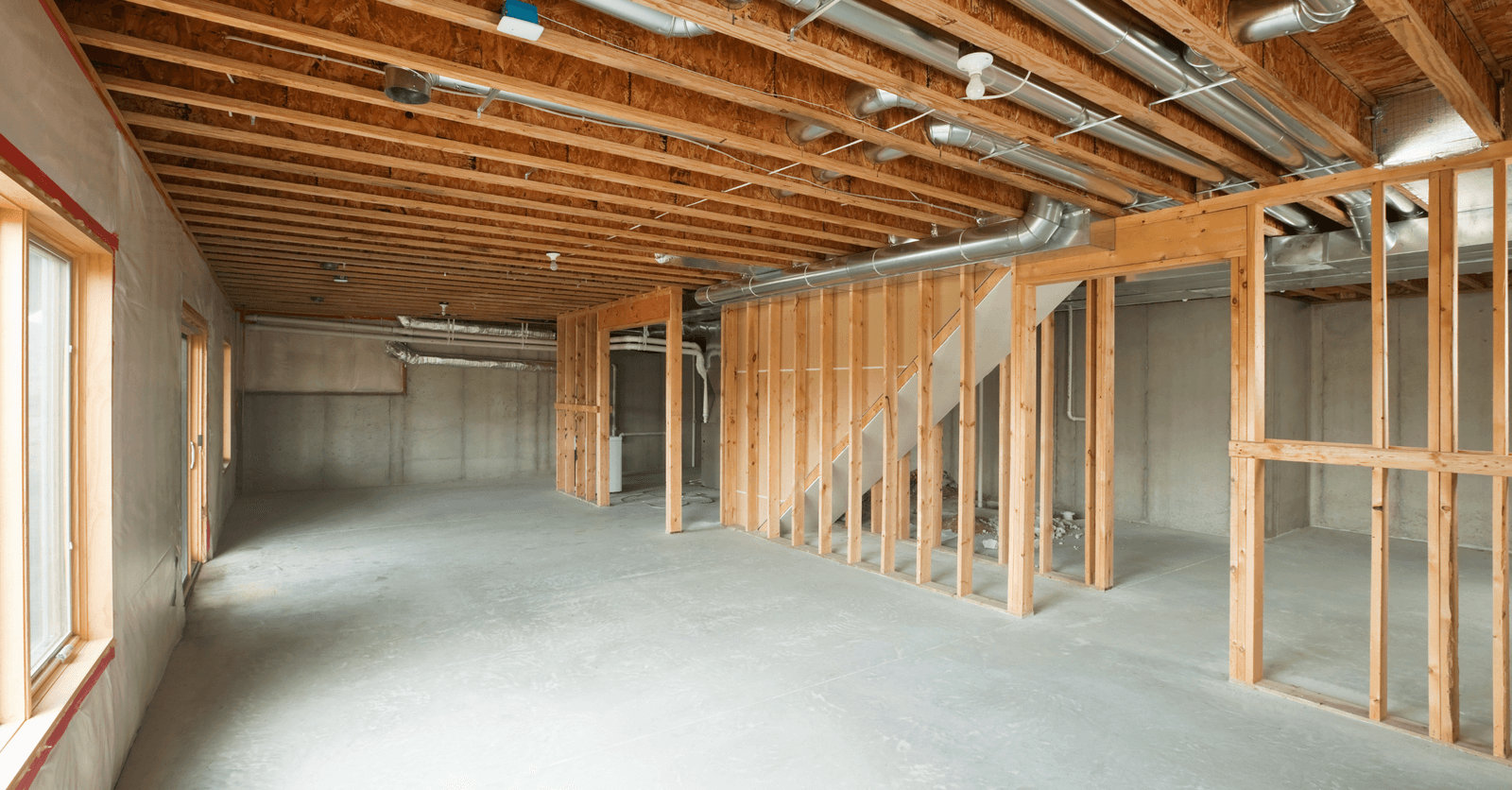
First off, note that there is no maximum ceiling height requirement for basements. As for the minimum heights established by current standards, these vary from one room to another.
In the kitchen, hallways, laundry room, and bathroom, the ceiling height should be at least 7 feet (83 inches). The same applies to the bedrooms, main living room and dining room (in the case of finished basements, meaning it has been converted into a living space).
However, as we mentioned in a previous article on the standard ceiling heights for a house, some parts of the basement can have a minimum height of six and a half feet (78 inches). The following rooms are included in this standard:
Hallways;
Secondary entryway;
Entire basement if it is unfinished;
Secondary living room;
Secondary dining/kitchen area.
Are you looking to transform your basement into living quarters? Check out our article Creating a Basement Apartment: What to Know!
Can you deviate from the typical height requirements?
In order to comply with Quebec's Construction Code (and the National Building Code of Canada), the current standards regarding finished basement ceiling heights (and ceiling heights in general) must be respected by builders as they were established to ensure both the comfort and safety of residents, whether that may be for a finished basement, ground floor, or upper levels.
How low is too low for finished basement ceilings?
Source: Canva
The impulse to lower the basement ceiling can be desirable for a number of reasons. In fact, some people appreciate the feeling of a more enclosed space. Nevertheless, note that anything below 7 feet for common areas and bedrooms is too low, and anything lower than 6.5 feet is too low for bathrooms and other areas.
If that is the look and feel you are going for, you may want to install a stretch ceiling (PVC ceiling fabric). However, should you choose this route, note that this type of material should be installed according to a specific procedure: Stretch the fabric with a heat gun. Soundproofing panels (such as SONOpan) can be installed over the fabric for added soundproofing and/or thermal insulation. Note that this is an expensive option, and repairs will need to be made if the fabric tears. Nevertheless, it is easily removed and available in a variety of finishes, making it a worthwhile option.
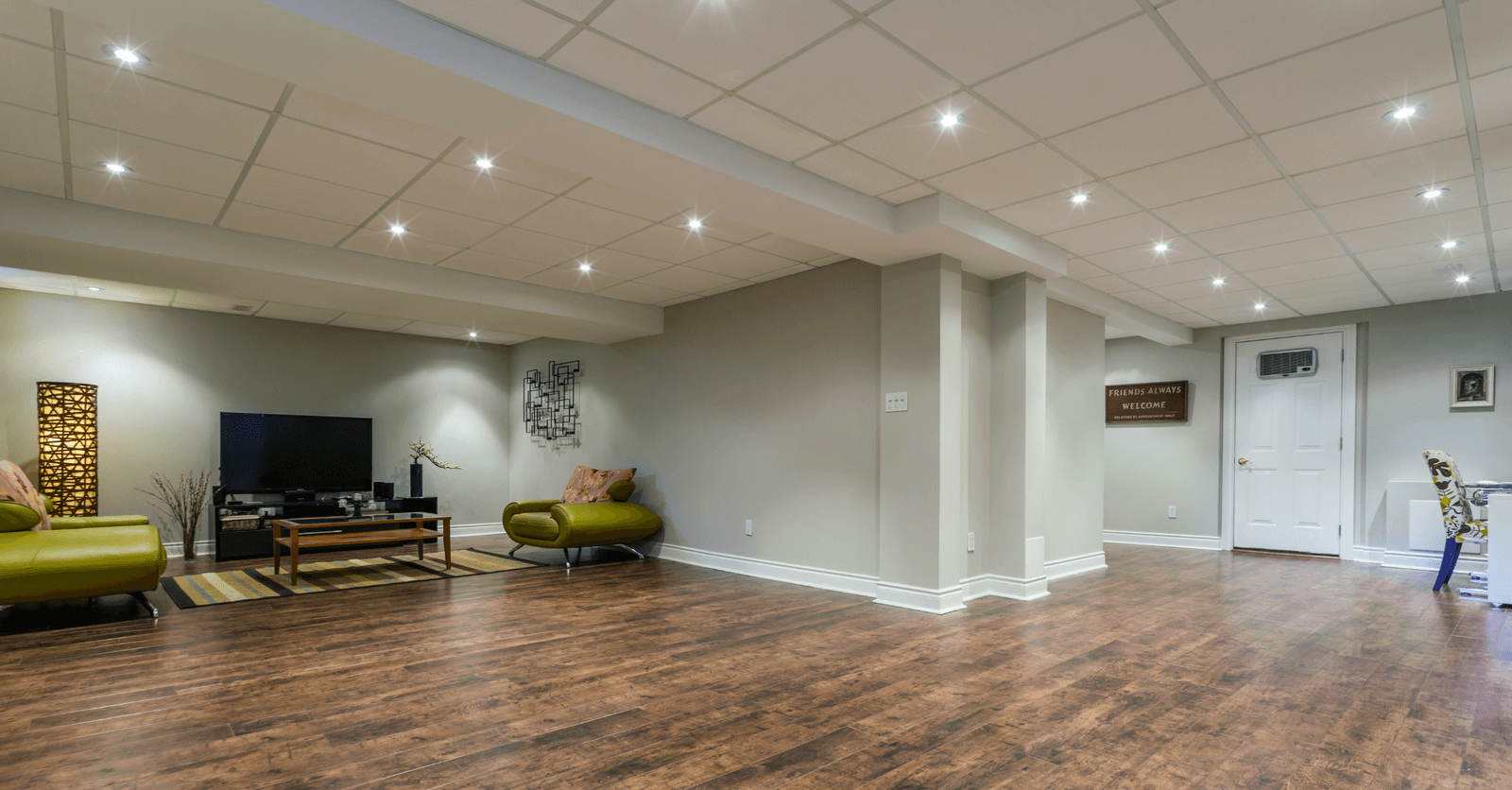
It is also possible to opt for a suspended ceiling (drop ceiling). This type of ceiling has the advantage of being relatively easy and quick to install. Drop ceiling tiles are rather inexpensive and can be easily removed and replaced, allowing quick access to any plumbing or electrical systems hidden therein.
Unfortunately, the variety of tile models currently on the market does not allow for original design choices as is possible with PVC. Besides, a drop ceiling will limit the available height much more than a stretched ceiling would.
As a matter of fact, if you are using QuickHang hooks, it is not recommended to install a drop ceiling within 4 inches of a drywall ceiling, 3 inches from the joists, and 2.5 inches below the joists. Typically, there will be an inch of clearance between the ceiling and the material (or fabric).
Brief Mention About Sloped Ceilings
While sloped ceilings are not as common, knowing the standard height to be met could come in handy. As such, if one room has a sloped ceiling, it means that the ceiling must be 7 feet across 50% of the space.
Get 3 renovation quotes for your ceiling renovation project
RenoQuotes.com can help you get quotes for your home renovation project. By submitting your project, we’ll put you in contact with top-rated contractors. Fill in the form on the homepage (it only takes a few minutes), and you will get estimates from trusted professionals.
Dial 1-844 828-1588 to speak with one of our customer service representatives.
Looking for something else?
Related articles
The latest industry news, interviews, technologies, and resources.
Cynthia Pigeon
•12 May 2026
Replacing a bathtub with a shower in Canada is a strategic renovation that generally costs between $5,000 and $12,000, depending on the materials, the existing plumbing, and the complexity of the work. This upgrade can improve the functionality, comfort, and perceived value of a home, especially when it supports accessibility, aging in place, or a more modern bathroom layout. Given that this type of project may involve plumbing, drainage, waterproofing, ventilation, and sometimes floor preparation, it is important to plan carefully. Depending on the province or municipality, plumbing work may need to be completed by a licensed plumber or qualified contractor. In many bathtub-to-shower conversions, the existing drain may also need to be assessed or upgraded to meet the requirements of the new shower installation.
Léa Plourde-Archer
•17 Feb 2025
Are you planning on renovating your kitchen? This process can be long and complicated, as it involves several steps as well as a number of factors that can affect the price, the duration of the work and the durability of the materials.

Editorial Team
•25 Sep 2024
When it comes to choosing a kitchen countertop material, one can quickly deduce that choices aren’t what’s lacking. In fact, there are at least ten different types of materials that are readily available in-store or from manufacturers.
Editorial Team
•28 Nov 2024
A product of post-war and industrial-inspired aesthetics, modern home decor bridges the gap between time-honoured and cutting-edge looks, featuring functional yet decorative features. This interior decoration style blends minimal aesthetic choices, in terms of colour schemes, patterns, architecture, and furnishings, highlighting pops of colour, within an otherwise sleek, elegant decor.

Editorial Team
•21 May 2026
Curious if concrete floors can be painted or coloured, or if they're compatible with an underfloor heating system? Wondering if a DIY concrete floor installation is achievable or best left with the pros? And, what type of contractor should you hire for the job? This article covers all these questions and more, offering valuable insights to help you decide whether concrete flooring is the right option for your home or business.