Regulations for swimming pool installation
By Équipe éditoriale
Updated on November 8, 2023

The anticipation of the incoming heat in the first few weeks of summer would drive anyone to want a pool, no? There’s no doubt that this prospect could lead you to dream of moments where you’ll be drinking sangria on an inner tube with your legs up and your hair in the wind.
Before you think about enjoying these pleasant summer afternoons poolside, bear in mind that an outdoor swimming pool is a source of danger for young children. To avoid accidents with dramatic consequences, it’s essential to be aware of standards to follow so that your pool and the installation process is safe for all and in all respects.
Swimming pool safety: the standards to be respected
A fence around the pool: is it compulsory?

Photo : Unsplash
In order to limit access to the pool when supervision is not possible, it’s necessary to install an enclosure at least 1.2 meters high for an above ground pool and less than 1.4 meters high for an inflatable pool. The enclosure will need to be able to close and lock automatically. Note the locking system must be inside the enclosure.
However, if your pool is higher than the standards mentioned above, or its access if via a terrace, or the opening to the pool is blocked by an enclosure 1.2 meters high, it’s not necessary to comply with this requirement. In the absence of an enclosure around a swimming pool, we should emphasize that the ladder leading into the water must be able to lock automatically.
Let us also take the time to specify that if you have an above ground pool surrounded by a platform equipped with a wall or railing of a height between 0.9 and 2 meters, you’re also exempt from the need to enclose this space.
When it comes to these above regulations, it should be noted that hedges and shrubs of all kinds aren't considered fences or enclosures. In the second step, it’s necessary for the bars of your fence to be less than 10 cm in width. This measure is so a child cannot fit their head through the cracks. In addition, attention must be paid to the design of your fence. Make sure to avoid models that could potentially be climbed on.
Lastly, it should be noted that the fence should be installed at least 1 meter from the edge of the pool and that a gap of less than 5 cm must separate the bottom of the fence from the ground.
The equipment of your pool: how to avoid danger

Photo : Pixabay
What about the equipment that will keep your pool running? To comply with regulations in place, they must be located more than one meter away from the fence or enclosure, unless under a terrace. This includes both the water filtration system and the heating system. Once again, the goal is to prevent a child from climbing on or using it to reach the pool. As for ducts, they must be flexible, always with the idea of not offering support for climbing.
Permits
It’s important to be aware that you’ll need a permit to install, construct or replace an in-ground, above-ground or inflatable pool (if at least 60 mm deep). The permit will be issued by your municipality and will likely cost around $50.
Although the requirements for obtaining this permit will range from one city to another, it’s highly likely that your application will need to be accompanied by a site plan, on which the location of your pool as well as equipment placement and various elements of your backyard will need to be indicated.
If you don’t feel comfortable drawing up the plans yourself, know that you can entrust a professional to do this for you. Do make sure to remember that if your pool is located within 1.5 meters of the lot of the land, your site plan should be prepared by a land surveyor.
Follow the law
Let’s end this article by reiterating the importance of complying with the law when it comes to installing a pool on your property. Not only will this help to avoid any unwanted accidents, but it will help you to avoid paying the price, literally. The approximate fine for a first offence will be between $500-$700, whereas a second offence will be between $700-$1000.
To avoid unpleasant surprises, make sure to do plenty of research or contact your municipality for the specific rules. It should be noted that rules will be different depending on your place of residence.
Get 3 renovation quotes for your pool project
RenoQuotes.com can help you get quotes for your pool and landscaping projects. If you submit your project to us, we’ll put you in contact with top-rated contractors. Fill in the form on the homepage (it only takes a few minutes), and you will get estimates from trusted professionals.
Looking for something else?
Related articles
The latest industry news, interviews, technologies, and resources.
Cynthia Pigeon
•30 May 2026
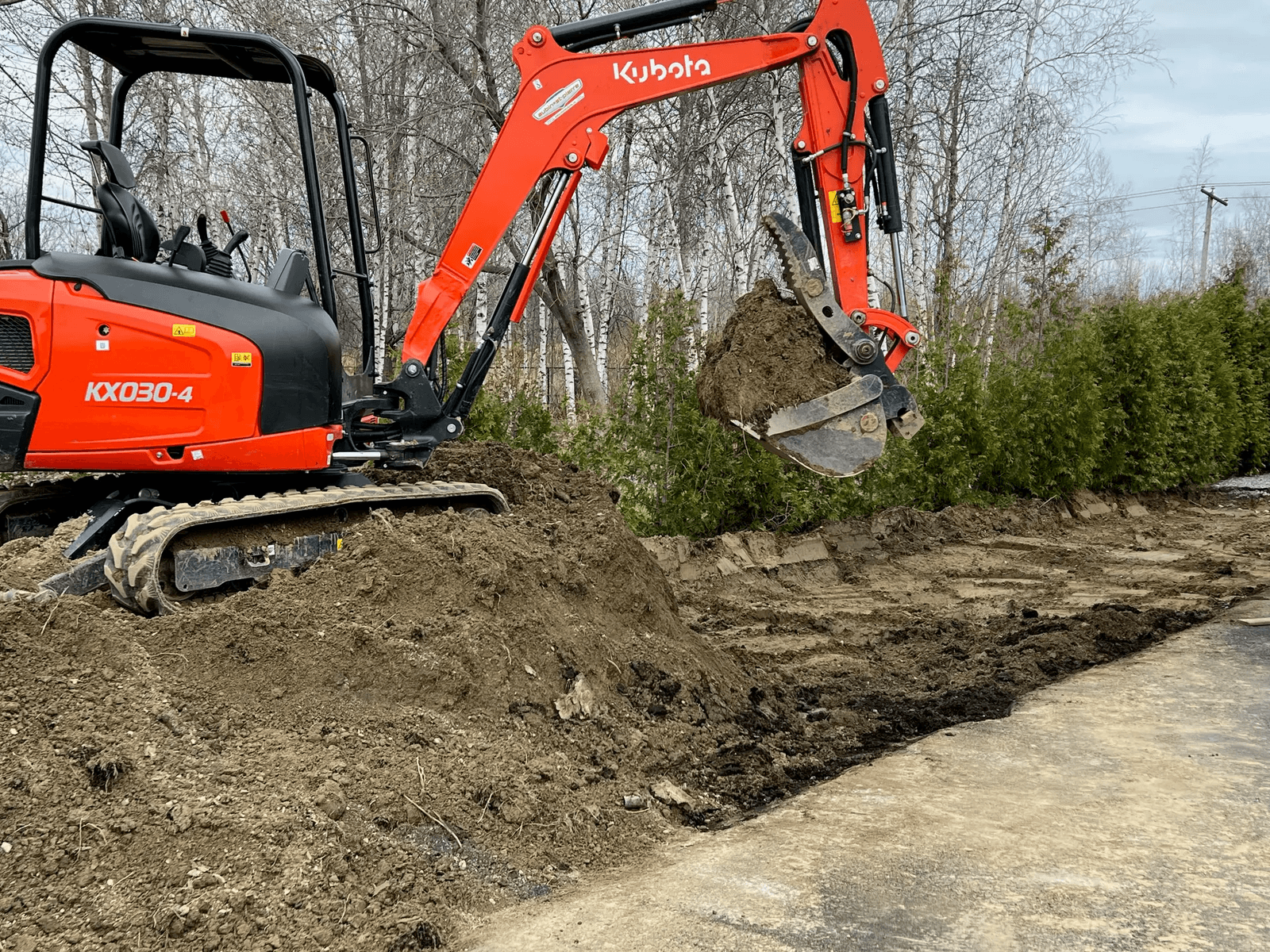
Quebec’s climate, combined with the presence of groundwater, iron-rich soils, and vulnerable drainage systems, can create favourable conditions for certain problems around foundations. Among the issues that can affect foundation drains, iron ochre is one of the phenomena to watch for, especially in areas where the soil and groundwater are rich in iron. This phenomenon can obstruct a property’s drainage system, encourage repeated water infiltration in the basement, and lead to costly damage if the problem is not corrected.

Christine Simard
•04 Nov 2025
Even though you consider your home to be synonymous with protection and shelter, severe storms can sometimes cause severe problems. Whether it's the fault of winds, heavy rain or thunderstorms, your roof is not immune to unforeseen damage.
Editorial Team
•13 Aug 2024
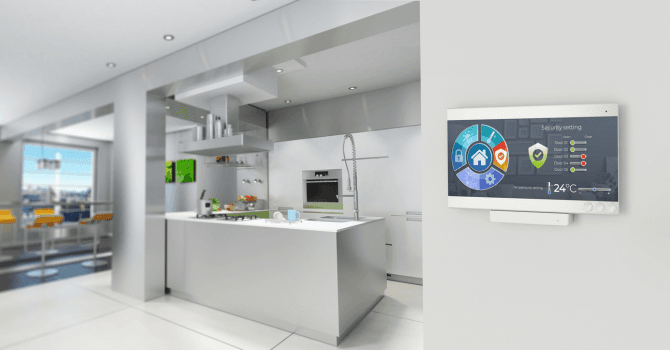
We’ve all heard of smartphones; at this point, they’re practically embedded into our everyday lives. So, if your phone can be smart, why not your entire home? Given the rate at which technology is evolving, rest assured, it can be done.
Léa Plourde-Archer
•08 Nov 2023
The last article about our renovation project was published in early December. We had started making major purchases, especially for the kitchen and flooring. Even though we haven't shared any news since then, this doesn't mean that nothing has happened!
Amanda Harvey
•27 May 2026
Building or renovating a home can get expensive quickly, especially when material prices, labour costs, delivery fees, and design changes start adding up. If you are planning fall renovations, early preparation can also help you secure a spot before contractor vacations and the summer slowdown affect availability.