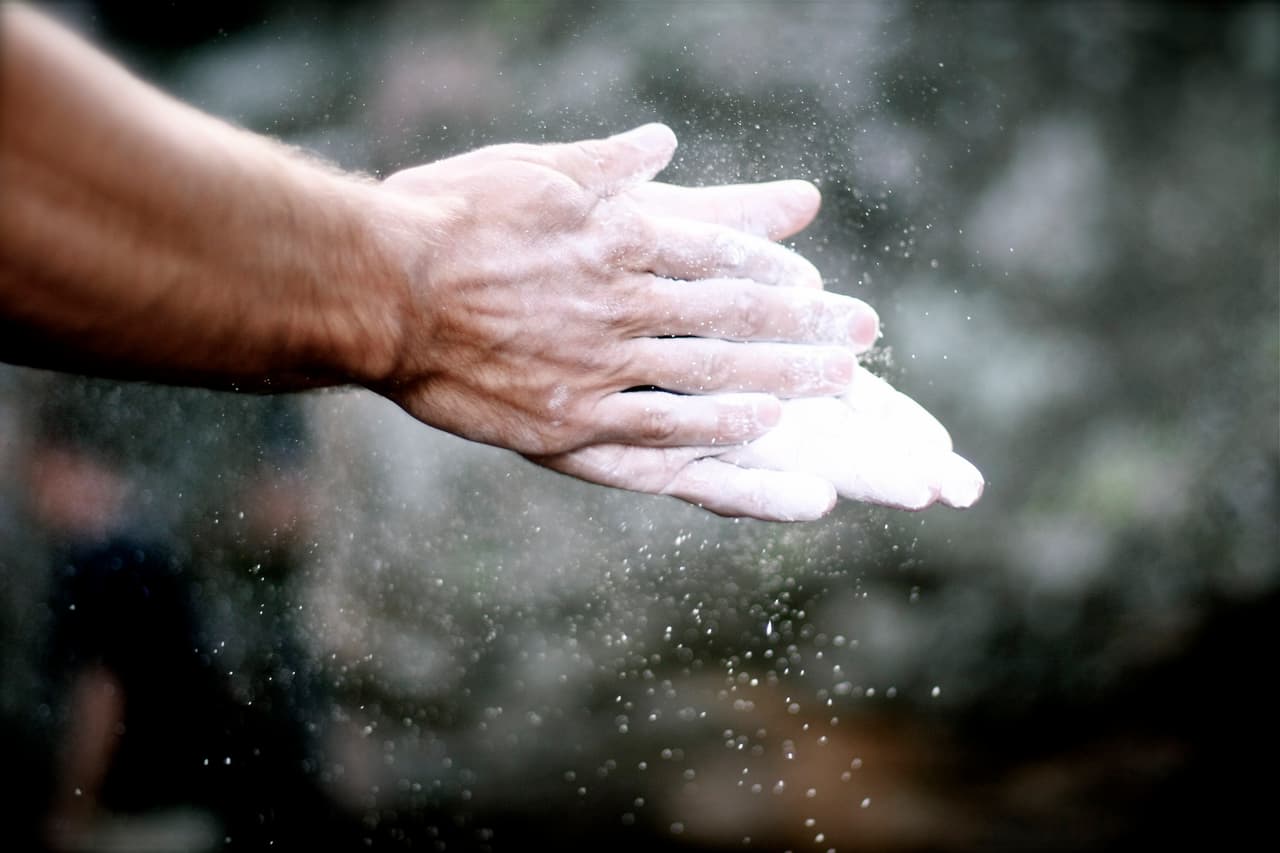
We’d all love for our interior and exterior walls to stay bright and fresh as if newly painted. Of course, paint doesn’t last forever and will often give in to the effects of time as well as the wears of everyday life. Have you noticed your paint starting to have a discoloured appearance? If you run your hands over your walls and find a white, chalky substance, this means that you’re dealing with something referred to as paint chalking.
But what causes paint chalking and how can it be remedied? Let’s look into the issue as well as possible solutions so that your home doesn’t feel like a high school classroom after the chalkboards have just been cleaned.
What is paint chalking?

source: unsplash
As we’ve explained in our introduction, chalking paint will appear as a white, powdery residue that will show up on the exterior surfaces of your home, but can also be found on interior surfaces. According to its definition, chalking is the alteration of a film of paint by releasing one or more of its components in the form of a fine non-adhering dust. Chalking is the result of a combination of things, and this includes interaction between oxygen, rainwater, and sunlight.
Essentially, ultraviolet light breaks down binders found in paint. When it does this, it releases the pigments. Another way that paint interacts with the environment is by way of oxygen. These same binders and oxygen work to create oxidization. In most cases, these two effects work simultaneously. Even if you’ve put a protective finish on your paint, these processes can still occur.
Since chalking is the formation of a fine powder on the surface, it hides the base paint. Thus, this can give off the appearance of discolouration. Although it might appear daunting, the presence of small quantities of chalking is manageable. However, if the quantity is too great, it can cause rapid deterioration of the paint's quality due to a rapid erosion process.
What causes paint chalking?
When summed up in a scientific manner, we’re technically talking about the chalking of lime. In a nutshell, chalking comes from the fact that paint saturation level is no longer what it should be. The saturation limit of paint reaches a maximum of 25% soil or ochre or a maximum of 15% carbon oxide.
By exceeding the maximum value of soil, ochre, or carbon oxide, the colour is not increased. Instead, it’s simply pushed out, causing dust to separate from the paint, giving it a discoloured appearance. On a long-term basis, it’s possible for your paint to start chalking as it approaches the end of its lifespan.
With this in mind, the two most common causes of chalking are using substandard paint as well as paint that is overly pigmented. Flat paints, white paints as well as light coloured paints hold the greatest risk of becoming susceptible to chalking. However, there are plenty of other possibilities including over-thinned paint, old paint, low-quality paint, a surface that hasn’t been primed or prepared properly. Otherwise, it may be a question of applying a paint that is not suited to its environment, such as applying an indoor paint on the exterior of the home. When chalking becomes excessive, it can quickly lead to streaking, lightening as well as erosion of the film coating.
The solution to chalking

source: unsplash
When it comes to dealing with chalking, there are a few methods you can use to approach this issue. First, it’s important that you start by removing the surplus with a cleaning tool. This can be completed with a hard bristle brush. If there is an excessive amount of chalking and you find a regular bristle brush isn’t doing the job, then it’s suggested you use a pressure washer alongside some soap, as water alone will not work hard enough to remove the residue.
Try to stick with an environmentally-friendly soap. The water and soap should sit on the wall for at least 15 minutes, and following this, should be thoroughly rinsed off with some plain water. If you find chalking to be a reoccurring conundrum, complete this pressure washing process a few times a year. Also, if you’ve never used a pressure washer before, you should check out our article on how to use a pressure washer.
Lastly, if you plan on finishing off the project with a new coat of paint, make sure the walls have dried. If you find there still is a significant amount of chalking before applying the paint, it’s recommended to apply a fixative finish to achieve optimal results. When repainting, make sure to choose a topcoat with a strong UV resistance as well as always priming the surface for optimal results. Also, if you're looking for advice regarding exterior painting, we have an excellent article on the subject.
Get 3 renovation quotes for your exterior wall painting project
RenoQuotes.com will put you in contact with 3 reliable contractors for your exterior wall painting project. Fill out the form on our homepage (it only takes a few minutes), and you will receive quotes from trusted professionals.
Dial 1-844 828-1588 to speak with one of our customer service representatives
Looking for something else?
Related articles
The latest industry news, interviews, technologies, and resources.
Cynthia Pigeon
•14 Apr 2026
To prevent water infiltration during the snowmelt season in Canada, three key actions are essential: test your sump pump, clear snow away from window wells, and ensure your downspout extensions discharge water at least 1.5 metres (5 feet) away from your foundation. If ice builds up along the edge of your roof, contact a professional to break up the ice dam before water backs up under the shingles.
Editorial Team
•23 Feb 2024
For a few years now, Boomerang Paint has been increasingly solicited for interior renovation and decoration projects. The reason being its green characteristics and excellent value for money. If you’re looking for eco-friendly interior paint, opting for recycled paint is the best decision you can make. Learn all about this type of product in the following section.
Cynthia Pigeon
•10 Sep 2026
In Canada, in 2026, the cost of renovating a walk-in shower generally ranges from $5,000 to $9,000 for a standard project, including materials and labour. For a high-end installation with premium materials, a linear drain, custom glass panels or built-in niches, costs can exceed $12,000. The final price depends mainly on the complexity of the waterproofing system, the choice of tile, the preparation of the subfloor and any required plumbing changes. For this type of project, it is recommended to hire a qualified contractor and, where applicable, licensed plumbing or electrical professionals to ensure the work complies with local building codes.
Cynthia Pigeon
•03 Nov 2025
Are you looking to add hardwood floors in the common areas of your house hoping to create a rustic feel? Cherry wood flooring, although not the cheapest option, has an exotic essence and makes for a durable choice due to its sustainable material.
Editorial Team
•07 Jul 2026
Made with plastic, vinyl first made its way onto the market in the shape of records (the infamous LP) or even as shiny items of clothing. During the 80s, this material became a popular, cushiony flooring option, vinyl sheets, or loose lay vinyl, which was also known as “cushion flooring.”