What is a Crawlspace and How to Know if Your House Needs One | Renovation Quotes
By Léa Plourde-Archer
Updated on May 13, 2024
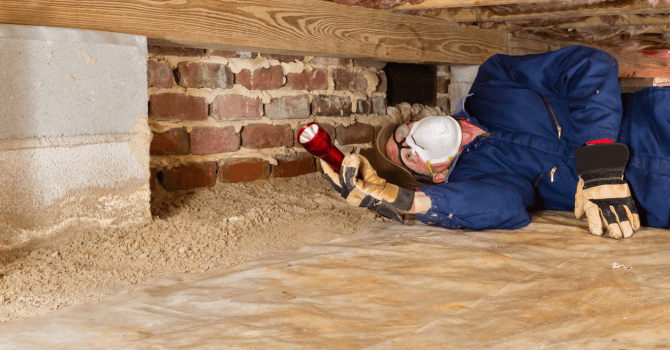
Is there a lot of clay in the soil around your house? Is the ground slanted or prone to earthwork? If your house doesn’t already have one, you might want to think about digging a crawlspace.
What is a crawlspace?
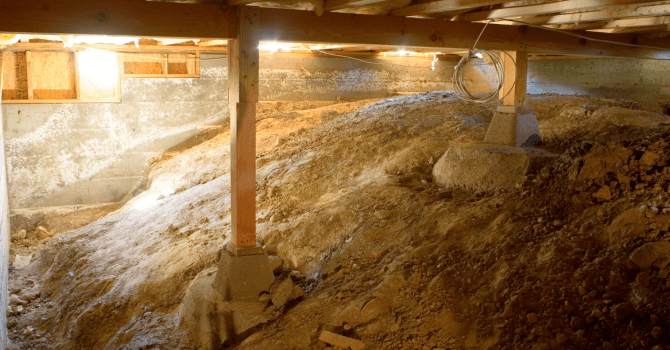
A crawlspace is an area under the house, located between the ground and the first floor of the house. It must be at least 20cm tall, but in general, it is closer to 1m tall. The crawlspace is where you will find pipes and other plumbing elements. It also acts to aerate the house and to remove the extra humidity that can be harmful to the house.
The pros of digging a crawlspace
Source: Canva
There are many benefits to setting up a crawlspace. First of all, if you have a water leak in your house or a problem with the electrical cables that are underneath the house, having access to this part of the building could be useful. It should also be noted that a house that includes a crawlspace will be further protected against eventual floods, as the space created by this crawlspace will allow the water to evacuate without difficulty.
Also, when compared to a house that was built directly on the ground, a house that is built slightly over the ground will be less prone to the effects of ground settlement. Therefore, it will be better protected against ground attacks which could, among other things, crack the tiles that are on the ground floor, for example.
Having a crawlspace under your house is also beneficial for ecological and financial reasons. In fact, that space that is occupied by the crawlspace will allow you to avoid the need to resort to earthwork and to take out large quantities of soil from your house.
Building a house with a crawlspace is more expensive at first but it becomes a profitable investment in the long term, due to the fact that it improves the house’s insulation and reduces the amount of humidity that affects your floors and partitions.
The cons of digging a crawlspace
Source: Canva
Certain experts are not happy with the return of crawlspace. It seems that this type of structure is not very eco-friendly, especially considering that there are other options out there. The crawlspace is also relatively cramped and cannot be used for storage or any other use that requires space to move around.
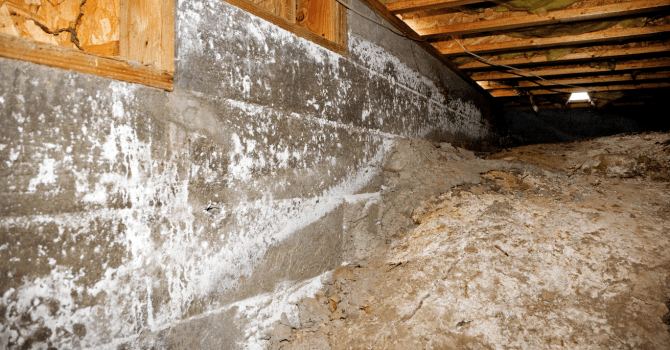
Moreover, if the crawlspace is not well insulated, the house could suffer certain consequences, such as frozen pipes, loss of heat, water infiltrations or humidity and mould problems. These are situations that need to be avoided as they will affect the air quality inside the home as well as the living conditions of the building's occupants.
Stone and concrete walls, which are often present in crawlspaces, often let heat pass through. Therefore, insulation and ventilation are two primordial aspects with regards to crawlspaces. If neglected, this type of installation can be very harmful to the rest of the house. Also be careful with radon gas, which is extremely dangerous and causes a lot of problems in Canadian homes.
Also note that if you live in a place where groundwater is high, installing a crawlspace can be a bad idea as the water could easily penetrate inside the home.
Humidity problems in your crawlspace: what you should do
Your home is already equipped with a crawlspace and is experiencing humidity problems? There are a few solutions. First, as mentioned previously, there is insulation. Two main techniques exist, which are insulation from the outside walls and insulation at the ground floor level.
In the second case, the insulation material can be applied to the joists or by installing a layer directly under the ground floor. Next, you must also think about the room temperature in the crawlspace as well as ventilation. It is very important to find a good balance as improper ventilation will also be very harmful.
Before you carry out any installation, make sure to clean or remove the surfaces that have been affected by the humidity. For more advice concerning insulation and ventilation of a crawlspace with the aim of avoiding a humidity problem, check out our article: How to insulate a crawl space: tips and guidelines.
Possibility to transform your crawlspace into a basement
Source: Canva
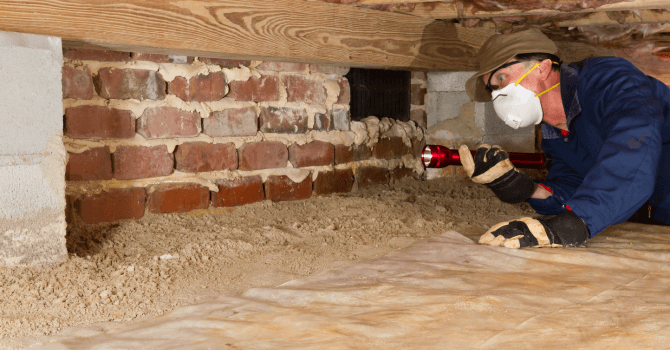
Building a crawlspace has another advantage, in that it can later be transformed into an extra living space.
Of course, this hypothetical situation depends on the height of your crawlspace. If your crawlspace is 50cm tall, you will have to excavate the ground and the project will become more expensive. However, if your crawlspace is 6 feet tall or more, in that case, you will only need to carry out a few extra modifications.
There is also the option to raise the house in order to expand it upwards. This procedure will create a basement that includes much more natural light. However, lifting a house is not an easy task, especially when your house is relatively old. Furthermore, solid masonry walls are almost impossible to lift up without causing major damage to the building.
On the other hand, excavating a basement also comes with certain risks. In one case or another, you will have to ask a structural engineer for their advice, in order to know if the project is doable. They will be able to determine the type of soil that is around your house and the current state of the foundations, to see if it will be possible to carry out your project.
Always meet with several contractors so you can compare different quotes!
Get 3 renovation quotes for your crawlspace installation or renovation project
RenoQuotes.com will put you in contact with 3 reliable contractors for your crawlspace installation or renovation project. Fill in the form on our homepage (it only takes a few minutes), and you will receive quotes from trusted professionals.
Dial 1-844 828-1588 to speak with one of our customer service representatives
Looking for something else?
Related articles
The latest industry news, interviews, technologies, and resources.
Editorial Team
•24 Jul 2025
Thinking about turning your basement into a legal apartment? Many Toronto homeowners are considering this renovation as a way to increase property value, generate extra income, or create independent living space for family. But how do you convert a basement into an apartment, and is it really worth the investment?
Léa Plourde-Archer
•08 Nov 2023
Winters in Canada are long, gruelling and freezing cold. Living in this country, you quickly discover ways to adapt to sub-zero temperatures: you purchase a down-filled, well-built jacket alongside some heavy-duty boots, you dress in layers and make sure little to no skin is exposed.

Editorial Team
•19 Mar 2026
Across Canada, we long for warm weather. Balmy months mean a chance to enjoy the great outdoors, and if you’re lucky, that also means enjoying a glass of wine on the comfort of your balcony. If your home has a balcony, you already know that keeping it in shape takes a little bit of effort and elbow grease.

Équipe éditoriale
•28 Apr 2026
For any homeowner, a contaminated property is a literal nightmare. What should you do if your home is infested with asbestos, radon, or mould? Such problems, which affect hundreds of thousands of homes across Canada, can severely hinder a home’s structural integrity, not to mention the health of its dwellers.

Cynthia Pigeon
•03 Nov 2025
Are your living room windows looking a little drab for your liking? Lucky for you, the various models available on the market are as ample as they are diverse! Should you be struggling to find the perfect model for your living room, check out the following models that are sure to help you make up your mind, regret-free.