Fibreglass Explained: What It Is, How It’s Made, and Its Uses
By Cynthia Pigeon
Updated on August 17, 2026
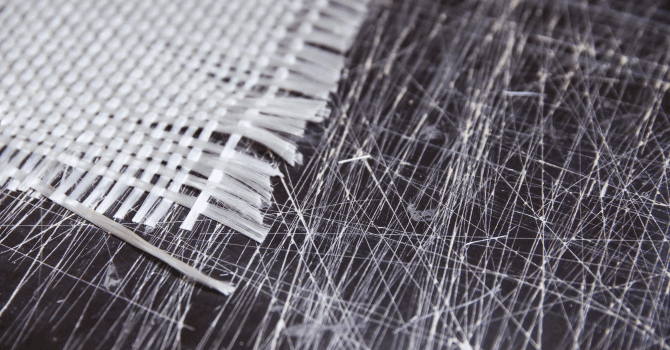
Fibreglass is a material made from extremely fine glass fibres. In construction and home renovation, those fibres are mainly used as glass wool for thermal and acoustic insulation or as reinforcement inside plastics, concrete, roofing materials, and other composite products.
Its versatility explains why fibreglass appears in insulation, bathtubs, balconies, swimming pools, roofing products, doors, cladding, pipes, and structural components. However, not all fibreglass products are alike. Their properties depend on the type of glass fibre, how the fibres are arranged, and the resin, binder, or other material surrounding them.
What is fibreglass made of?
Source: Canva
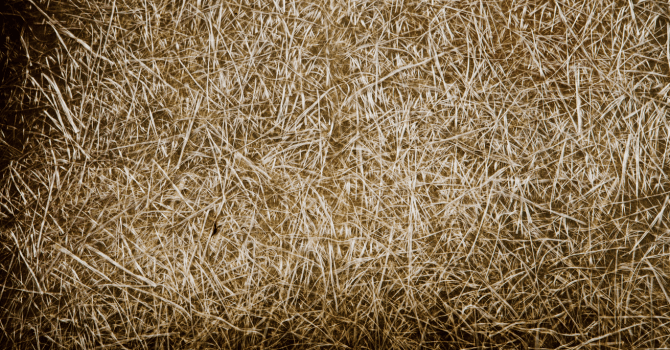
Fibreglass starts with glass-forming raw materials that are melted at high temperatures. Formulations vary by manufacturer and intended use, but they can include silica sand, limestone, soda ash, borates, other mineral ingredients, and recycled glass. Once melted, the glass can be formed into extremely fine filaments or fibres.
The term "fibreglass" is sometimes used loosely for several different materials:
Glass fibre: individual fine filaments made from glass
Glass wool: a lightweight mass of glass fibres commonly used for thermal and acoustic insulation
Fibreglass-reinforced plastic: a composite in which glass fibres reinforce a polymer resin
GFRP: glass-fibre reinforced plastic
GRP: glass-reinforced plastic
FRP: fibre-reinforced plastic, a broader term that can include glass, carbon, aramid, or other reinforcing fibres
This distinction matters in renovation. A fibreglass insulation batt and a moulded fibreglass bathtub both contain glass fibres, but their structure, manufacturing method, and performance are very different.
Types and Properties of Fibreglass
Source: Canva
Different glass formulations and fibre arrangements are designed for different purposes. Manufacturers select them according to the strength, chemical resistance, stiffness, electrical performance, and durability required.
E-Glass
E-glass is the most widely used type of continuous glass fibre for general composite reinforcement. The "E" originally referred to its electrical properties, although today it is used for many structural and general-purpose applications.
It offers a useful balance of:
Tensile strength
Stiffness
Electrical resistance
Moisture resistance
Cost
Compatibility with common resins
E-glass is found in many construction products, pipes, tanks, marine components, sporting goods, and transportation applications.
E-CR Glass
E-CR glass is a variation developed for improved resistance to acidic and corrosive environments. This makes it useful in products such as pipes, tanks, gratings, and other components that may be exposed to moisture or chemicals.
In residential construction, homeowners are less likely to encounter the term directly, but similar corrosion-resistant glass fibres may be present in specialized composite products.
Alkali-Resistant Glass
Ordinary glass fibres can be affected by the highly alkaline environment found in cement-based materials. Alkali-resistant, or AR, glass fibres are formulated to better withstand these conditions.
They are particularly important in glass fibre reinforced concrete, or GFRC, where they help reinforce thin concrete components such as façade panels, mouldings, decorative elements, and architectural features.
High-Strength and High-Modulus Glass
Specialized glass fibres can provide greater strength or stiffness than conventional E-glass. They are more common in demanding industrial, transportation, wind-energy, and aerospace applications than in ordinary residential renovations.
Their existence highlights an important point: "fibreglass" does not describe one fixed material with one fixed strength.
What properties does fibreglass have?
The performance of fibreglass depends heavily on whether the material is being discussed as loose glass fibre, insulation, or a finished composite.
Low Weight
Glass-fibre composites can provide considerable strength without the weight associated with some traditional materials. This is useful for prefabricated balconies, panels, doors, ladders, tanks, and other components that need to be transported or installed efficiently.
High Tensile Strength
Glass fibres perform well when forces attempt to pull them apart. This is known as tensile strength.
In a composite, the fibres provide much of the reinforcement while the surrounding resin holds them in place and transfers forces between them.
Moderate Stiffness
Fibreglass composites are stiff, but their stiffness is generally lower than that of steel. An engineering measurement known as Young's modulus describes how much a material deforms under load.
Glass fibre has a lower modulus than steel, which means fibreglass components may need different dimensions or designs to achieve the required stiffness. For homeowners, the practical point is that fibreglass cannot simply replace steel or another structural material on a one-for-one basis. The entire component has to be engineered for its intended load.
Resistance to Corrosion and Rot
Glass fibres do not rust like steel or rot like wood. Properly designed fibreglass composites can therefore perform well in wet or corrosive environments, which is one reason they are used in pools, water tanks, pipes, exterior panels, balcony surfaces, and marine applications.
The surrounding resin and protective surface are important, however. Damage, poor manufacturing, or long-term weather exposure can still affect the finished product.
Electrical Insulation
Glass fibres have good electrical insulating properties, making them useful in electrical and electronic applications as well as construction products where electrical conductivity would be undesirable.
Thermal Performance
Fibreglass insulation works differently from rigid composite fibreglass. Its fine fibres create many small pockets of trapped air, which slow heat transfer through the material.
The actual R-value depends on the insulation product, thickness, density, and quality of installation.
Fire Performance
Glass itself is inorganic and non-combustible. However, that does not mean every product described as fibreglass is non-combustible.
Composite products can contain materials that change the fire performance of the finished product, including:
Polyester resin
Vinyl ester resin
Epoxy resin
Thermoplastic resins
Binders
Coatings and facings
Core materials
Fire ratings should therefore be checked for the finished building product rather than assumed from the glass fibres alone.
Directional Strength
Fibreglass composites can be designed so that fibres run mainly in the directions where strength is needed. For example, woven glass cloth, randomly oriented chopped strand mat, and bundles of continuous parallel fibres can produce very different mechanical properties even when they are made from similar glass.
This ability to control fibre orientation is one of the major advantages of composite construction.
How is fibreglass made?
Source: Mas Air Home Comfort Inc.
Fibreglass production begins by combining and melting glass-forming materials at temperatures commonly around 1,400°C to 1,600°C, depending on the glass composition and manufacturing process. The molten material must be carefully controlled so the finished fibres have a consistent composition and diameter.
Forming Continuous Glass Filaments
For continuous reinforcement fibres, molten glass passes through a metal plate containing many extremely small openings. Each opening produces a fine glass filament.
The filaments are rapidly drawn to reduce their diameter and then gathered into strands. A coating known as sizing is generally applied during this process to:
Protect the fibres against abrasion during handling
Help hold individual filaments together
Improve compatibility between the glass and the resin used in the finished composite
The strands can then be wound onto packages for additional processing.
Producing Glass Wool
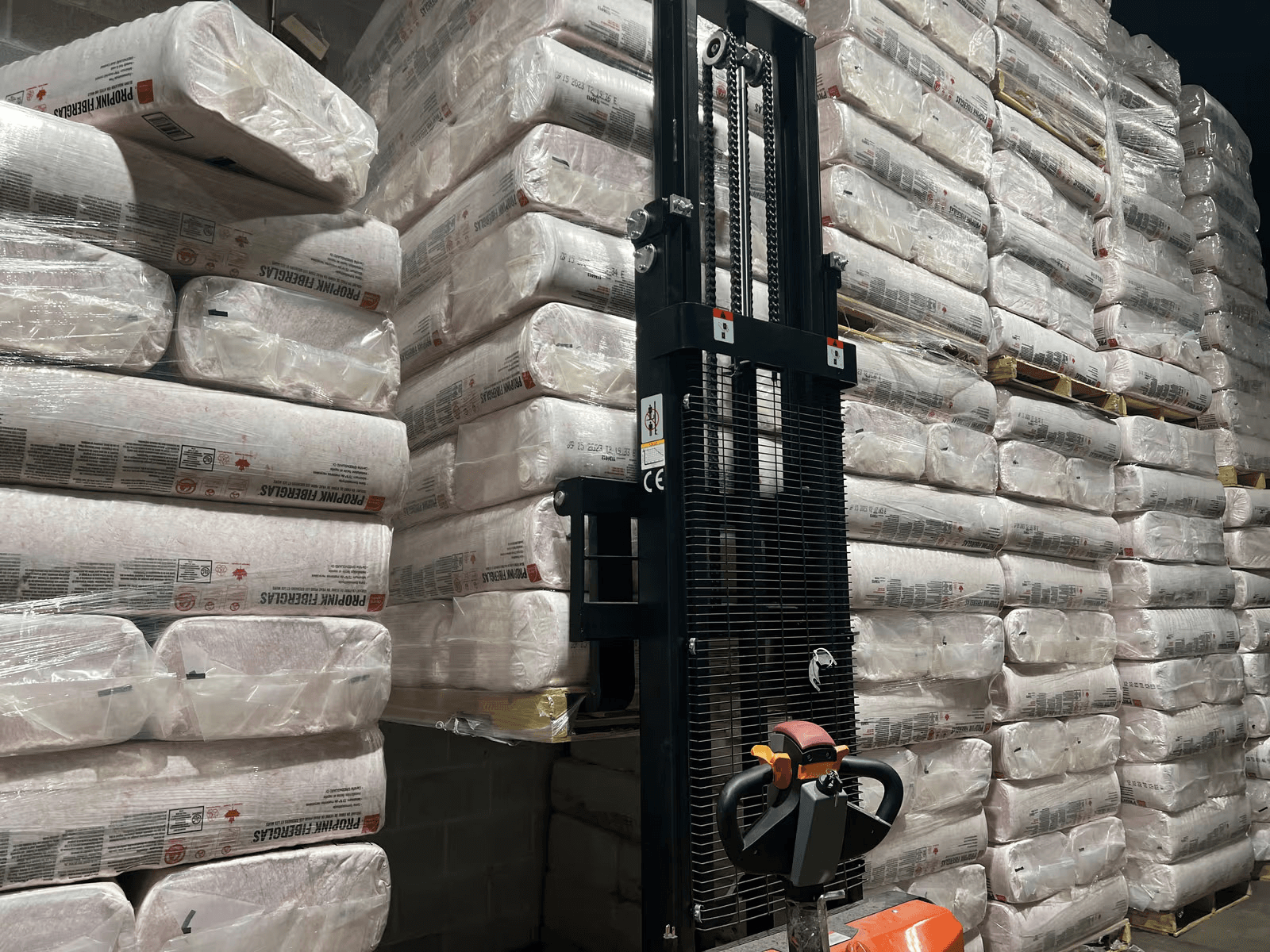
Fibreglass insulation is manufactured differently. Molten glass is converted into large quantities of very fine fibres, commonly using rotary fibre-forming equipment. The fibres collect into a light, wool-like mass containing many air spaces.
A binder may be applied to help the fibres retain the required shape. The material can then be cured and formed into products such as:
Batts
Rolls
Boards
Pipe insulation
Loose-fill insulation
The density, fibre arrangement, binder, thickness, and facing can vary according to the intended application.
Preparing Fibres for Composite Manufacturing
Continuous glass fibres can be processed into several reinforcement formats, each with distinct structural characteristics and applications:
Roving: Bundles of continuous fibres that can be used directly or further processed
Chopped strands: Shorter lengths of reinforcement that can be mixed into resins or other materials
Chopped strand mat: Short glass fibres distributed in different directions and held together to form a sheet
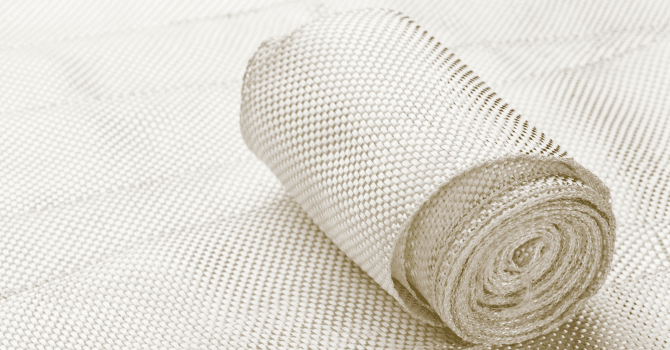
Woven glass cloth: Fibre bundles woven into fabric, with different weave patterns affecting how the composite behaves
Unidirectional reinforcement: Fibres placed primarily in one direction to provide high strength along a particular axis
The type and orientation of reinforcement are chosen according to how the finished component will be loaded.
How are fibreglass composite products manufactured?
Once glass fibre has been produced, it must be combined with resin and shaped into a finished component. Several manufacturing methods are used, and each is suited to different shapes, production volumes, surface finishes, and performance requirements.
Hand Lay-Up
The hand lay-up technique is one of the simplest ways to manufacture a fibreglass composite. A release agent is first applied to a mould so the finished part can be removed, after which layers of glass cloth, chopped strand mat, or other reinforcement are positioned inside.
Liquid resin is then applied and worked through the fibres using tools such as rollers or brushes. Additional layers can be added until the required thickness is reached, after which the resin is allowed to cure.
Hand lay-up is useful for relatively large components and limited production runs. However, because much of the work is manual, finished quality depends heavily on workmanship and process control.
Spray Lay-Up
The spray lay-up process is another open-mould method. Equipment chops continuous glass reinforcement while simultaneously spraying it with a resin mixture onto a mould.
The material is then rolled or compacted to:
Distribute the fibres
Remove trapped air
Improve resin saturation
Spray lay-up can cover large areas more quickly than hand placement of reinforcement. Open-mould processes may expose workers to glass fibres, resin chemicals, and vapours, so appropriate industrial ventilation and exposure controls are important.
Vacuum Bag Moulding
Vacuum bag moulding improves the consolidation of a laminate by sealing flexible film over the reinforcement and applying a vacuum. Atmospheric pressure then pushes the layers together while excess air is removed.
This can help reduce voids and improve fibre-to-resin consistency compared with a basic hand lay-up. Related vacuum-assisted processes can also draw resin through dry reinforcement.
Filament Winding
During filament winding, continuous strands are passed through or coated with resin and wound around a rotating form known as a mandrel. The angle and pattern of the fibres are carefully controlled.
This process works particularly well for round or hollow structures that need high strength in specific directions, including:
Pipes
Water tanks
Pressure vessels
Cylindrical structural components
Once the resin has cured, the mandrel may be removed or remain as part of the finished product, depending on the design.
Pultrusion
Pultrusion is a continuous manufacturing process used to create long products with a consistent cross-section. Continuous glass fibres are pulled through resin and then through a heated die, where the composite is shaped and cured.
Unlike extrusion, where material is pushed through a die, pultrusion pulls the reinforcement through the manufacturing line.
The method can produce structural profiles such as:
Angles
Channels
Rods
Tubes
Grating components
Other constant cross-sections
Pultruded fibreglass is increasingly used where designers want lightweight, electrically non-conductive, or corrosion-resistant structural components.
Moulded and Sandwich Construction
Some fibreglass components use a core material between reinforced outer skins. This type of shell or sandwich construction can increase stiffness without adding the weight of a solid laminate.
Depending on the application, structural foam or other lightweight core materials can be used. The final properties depend not only on the fibreglass but also on the resin, core, fibre orientation, thickness, curing process, and overall design.
Which resins are used with fibreglass?
The glass reinforcement is only part of a fibreglass composite. A polymer matrix holds the fibres in place and transfers loads through the material.
Polyester Resin
Polyester resin is widely used because it can provide a practical balance of cost and performance. It is common in general-purpose moulded fibreglass products, including marine and building components.
Some polyester resin systems contain styrene. During manufacturing, especially with open-mould processes, styrene vapours can create an occupational exposure concern and require appropriate controls.
Vinyl Ester Resin
Vinyl ester resin is often chosen when greater chemical or moisture resistance is needed. It is commonly used in pipes, tanks, industrial equipment, and environments where corrosion resistance matters.
Epoxy Resin
Epoxy can provide strong adhesion and good mechanical performance and is often used for higher-performance composites. It can be more expensive than general-purpose polyester systems.
Thermoset and Thermoplastic Matrices
Many familiar fibreglass composites use a thermoset polymer matrix. Once cured, a thermoset resin forms a permanent three-dimensional structure and generally cannot simply be melted and reshaped.
Fibreglass can also reinforce thermoplastic materials. Thermoplastics soften when heated and harden again when cooled, making their manufacturing and recycling behaviour different from thermoset composites.
Why is fibreglass used in construction?
Source: RénoVplus
Fibreglass is useful in construction because its properties can be tailored to many different products.
Depending on how it is manufactured, it can provide:
High strength relative to weight
Resistance to corrosion
Resistance to rot
Electrical insulation
Thermal insulation
Acoustic performance
Flexible moulding and design possibilities
Compatibility with prefabricated construction
These advantages explain its use in products ranging from soft insulation batts to rigid structural profiles.
Fibreglass Balconies, Patios, and Stair Treads
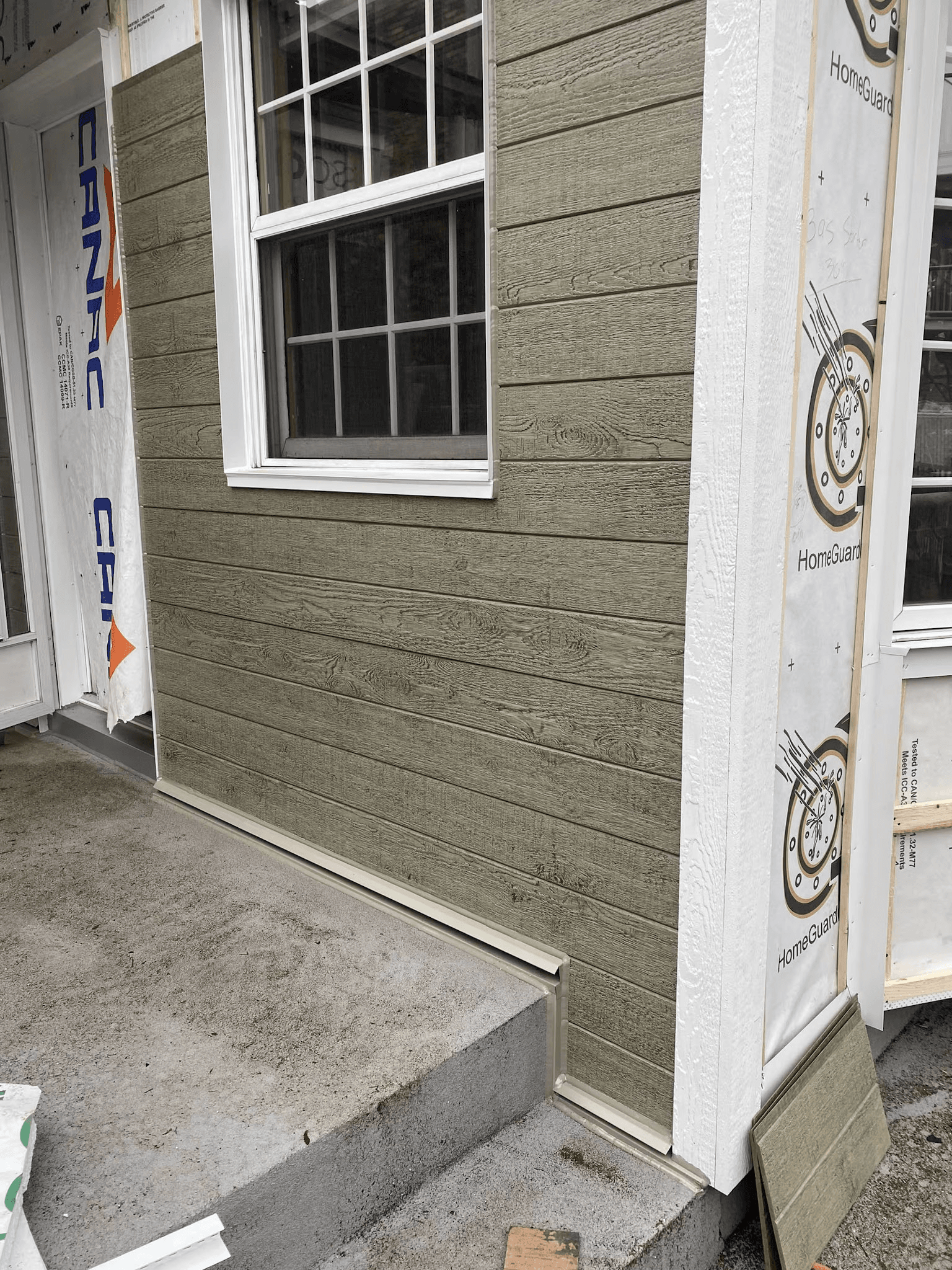
Fibreglass-reinforced composites are commonly used for balconies, patios, stair treads, and similar exterior components. When the entire system is properly manufactured and installed, the finished surface can resist water, weathering, and regular wear while requiring relatively little maintenance.
Prefabricated fibreglass-covered balconies are also used on residential buildings.
Fibreglass finishes are available in several colours and surface textures. On surfaces exposed to direct summer sun, lighter colours can be more comfortable because dark finishes generally absorb more solar heat.
Bathtubs, Showers, and Pools
Fibreglass composites can be moulded into curved and complex shapes, making them well suited to bathtubs and enclosures, shower units, sinks, and swimming pools.
The finished surface provides water resistance, while the glass reinforcement gives the shell strength and stiffness.
Doors, Cladding, and Roofing Products
Glass fibres are used in exterior door skins, wall and cladding components, roofing materials, and construction panels.
For example, fibreglass reinforcement is widely incorporated into roofing products to improve dimensional stability and reinforce otherwise softer materials.
Fibreglass for Structural Reinforcement
Glass fibres can also reinforce concrete and polymer-based building products. Glass fibre reinforced concrete, or GFRC, uses alkali-resistant glass fibres in a cement-based matrix and is frequently used for relatively thin architectural panels and decorative concrete components.
GFRP can also be formed into structural profiles, gratings, reinforcing bars, and other construction components. Fibreglass should not automatically be treated as an interchangeable substitute for steel, wood, or concrete. Structural products must be designed for their intended loads, connection details, fire requirements, and environmental conditions.
Fibreglass as Thermal and Acoustic Insulation
Source: Canva
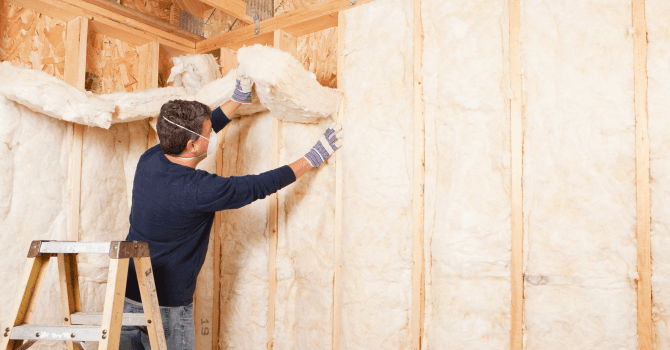
Fibreglass insulation is widely used in Canadian homes in attics, walls, basements, floors, and other parts of the building envelope. Natural Resources Canada identifies glass fibre batts, blankets, and loose-fill products among common residential insulation materials.
Fibreglass is available in forms such as:
Batts
Rolls
Loose fill
Boards and specialized panels
Pipe and duct insulation
Its thermal performance comes largely from the air trapped within the network of fine fibres. Fibreglass can also contribute to acoustic control because the fibrous structure absorbs some sound energy within wall, floor, and ceiling assemblies.
For more information on insulation materials, see our guide to home insulation.
Installation Quality Matters
The rated R-value of fibreglass insulation assumes that the product is installed correctly. Common issues that can reduce its effective performance include:
Gaps in the insulation
Compressed batts
Incomplete coverage
Air movement through the assembly
Insulation also needs to work with the home's air barrier, vapour-control strategy, ventilation, and moisture-management systems. This is especially important when renovating older homes, where simply adding insulation without addressing air leakage or moisture problems can lead to disappointing results.
Improving the complete building envelope can help reduce heating and cooling demand and improve home energy efficiency.
Health and Safety Considerations With Fibreglass
Fibreglass is common in homes, but cutting, installing, removing, or disturbing it can release fibres and dust. The main concerns depend on the product and activity involved.
Skin and Eye Irritation
Glass fibres can cause mechanical irritation when they come into contact with the skin. Possible effects include:
Itching
Redness
Temporary skin irritation
Eye irritation if fibres or dust enter the eyes
This irritation results from physical contact with the fibres rather than the same type of chemical burn caused by a corrosive substance. Long sleeves, gloves, and suitable eye protection can help reduce direct contact.
Inhalation and the Respiratory System
Cutting, tearing, sanding, demolishing, or otherwise disturbing fibreglass can produce airborne fibres and dust. NIOSH identifies inhalation as one potential route of exposure to fibrous glass dust, with possible symptoms including irritation of the nose and throat and breathing discomfort.
The amount of exposure can depend on:
Fibre dimensions
Amount of dust generated
Ventilation
Length of exposure
Type of work being performed
Dust-generating work should be controlled rather than relying only on personal protective equipment.
Exposure Limits
Occupational exposure limits are primarily intended for workplaces where people may repeatedly handle fibreglass. NIOSH lists a recommended exposure limit for fibrous glass dust of 3 fibres per cubic centimetre for certain fibres, along with a 5 mg/m³ total dust limit, measured as a time-weighted average.
These occupational limits should not be interpreted as a target for homeowner exposure. The practical goal during renovation is to minimize airborne dust and unnecessary contact.
Canadian workplace requirements vary by jurisdiction, so employers and contractors must follow the applicable provincial or territorial occupational health and safety requirements.
Is fibreglass a carcinogen?
Fibreglass is sometimes confused with asbestos because both materials can appear fibrous. They are not the same material and should not be treated as having the same health risk.
Current occupational-health classifications distinguish common insulation glass wool and continuous glass filament from asbestos. OSHA notes that insulation glass wool and continuous glass filament are not classifiable as to their carcinogenicity to humans.
That does not mean fibreglass dust should be inhaled. Controlling airborne fibres and avoiding unnecessary exposure remain appropriate precautions.
Resins and Other Chemicals Matter Too
When discussing fibreglass safety, it is important to distinguish between glass fibres and the chemicals used to make composite products.
Fabricating, repairing, sanding, or cutting certain fibreglass-reinforced plastics may involve exposure to:
Polyester or vinyl ester resins
Epoxy systems
Curing agents
Solvents
Styrene vapours
Dust from cured composites
These can present hazards separate from the glass fibres themselves.
Manufacturing methods such as open-mould hand lay-up and spray lay-up can involve significant resin handling and vapour control requirements. This is one reason large-scale composite fabrication is normally carried out in controlled workplaces rather than treated as ordinary homeowner DIY work.
Handling Fibreglass Insulation Safely
When working around fibreglass insulation:
Follow the manufacturer's installation and safety instructions
Wear clothing that limits skin contact
Use gloves and eye protection
Avoid rubbing exposed skin
Minimize dust generation
Provide suitable ventilation
Use respiratory protection when required for the task and product
Clean the work area using methods that limit redistribution of dust
Major insulation removal or demolition may be better handled by a qualified contractor, particularly when large amounts of material are involved.
Older homes may also contain asbestos or other hazardous materials unrelated to fibreglass. Materials that could contain asbestos should be assessed before being cut, removed, or disturbed.
A Brief History of Fibreglass
Fibreglass is often described as a 20th-century invention, but people experimented with drawing glass into fibres much earlier.
Early Glass Fibres
Glassmakers had known for centuries that heated glass could be pulled into fine threads. Early glass fibres were generally decorative or experimental rather than mass-produced structural materials.
An important step came in 1880, when Hermann Hammesfahr received a U.S. patent for glass cloth made partly or entirely from fine-spun glass fibres. His process involved drawing softened glass into threads and weaving the resulting fibres into fabric, and the patent even described possible insulating uses.
The material was innovative, but manufacturing glass fibre consistently and economically on an industrial scale remained difficult.
The Development of Modern Fibreglass
The major breakthrough came during the 1930s. Research at Owens-Illinois and Corning Glass Works led to methods of producing glass fibres in commercial quantities, laying the foundation for the modern fibreglass industry.
In 1938, the two companies spun off their glass-fibre operations to form Owens-Corning Fiberglas Corporation. Industrial-scale production helped transform fibreglass from a specialty material into a practical product for insulation and manufacturing.
Expansion Into Reinforced Plastics
Fibreglass gained another important role when manufacturers began combining glass fibres with polymer resins. Instead of using glass only as loose or woven fibre, manufacturers could place it inside plastic to produce a relatively lightweight but strong composite.
During the 1940s, fibreglass-reinforced plastic began appearing in boat hulls and other moulded components. Its ability to form complex, water-resistant shapes made it especially attractive to the marine industry.
By the 1950s, fibreglass composites had expanded into automobiles and other manufactured products. The 1953 Chevrolet Corvette became one of the most recognizable early examples of a production vehicle using a fibreglass-reinforced body.
Growth of Fibreglass Insulation
Fibreglass insulation also evolved during this period. In 1954, Owens Corning introduced a rotary fibre-forming process for producing fibreglass wool, and variations of rotary manufacturing remain important in glass-wool production.
Residential demand later grew substantially as building practices increasingly emphasized thermal insulation and energy conservation. Today, glass fibre insulation is one of several common insulation options used in Canadian homes.
Fibreglass Today
Modern glass fibres are highly engineered products. Manufacturers can modify glass chemistry, filament size, sizing, fibre orientation, resin formulation, and manufacturing methods to produce materials for very different environments.
Fibreglass is now used in:
Residential and commercial construction
Roofing
Pipes and water tanks
Boats and surfboards
Automobiles
Aircraft components
Wind turbine blades
Electrical equipment
Sports equipment
Orthopedic casts
Industrial structures
For homeowners, however, the most familiar forms remain insulation and moulded or reinforced building products.
What to Remember About Fibreglass
Fibreglass is not a single finished product. It begins with fine glass fibres, but those fibres can become soft glass-wool insulation, woven reinforcement, chopped strand mat, concrete reinforcement, or rigid glass-fibre reinforced plastic.
Its strength, stiffness, fire behaviour, moisture resistance, and durability depend on the type of glass, fibre orientation, resin or binder, manufacturing process, and complete product design. In residential renovation, fibreglass remains especially important for insulation, balconies, bathtubs, pools, doors, roofing products, and a growing range of composite building components.
Looking for something else?
Related articles
The latest industry news, interviews, technologies, and resources.

Amanda Harvey
•08 Nov 2023
A well-kept and intricately designed front lawn will allow you to explore your creativity while adding to the curb appeal of your home. Landscaping is a valuable practice and can involve elements from trees and plants to decorative stonework and architectural elements. Taking on a landscaping project can be a quick DIY job or a week-long undertaking. Either way, if you’re living in the city of Toronto, it is important to make sure you’re following the rules when it comes to tampering with your lawn and the surrounding areas.

Cynthia Pigeon
•14 Apr 2026
Indoor air quality in Canadian homes is contingent on a delicate balance between airtight construction and proper ventilation. To maintain healthy air, it’s essential to keep humidity levels between 30% and 50% (depending on the season), test your basement for radon, and ensure your heat recovery ventilator (HRV) is regularly maintained. Clean indoor air helps prevent mould growth and reduces the risk of asthma and serious respiratory conditions linked to household pollutants.

Editorial Team
•20 Jul 2026
Smart technology isn't just changing the way we live at home and function at work - it's revolutionizing the rental property market. For investors and landlords, integrating smart devices into rental apartments isn't just about attracting tech-savvy tenants; it's about adding value, increasing security, and improving operational efficiency.
Editorial Team
•23 Jun 2026
An air exchanger helps replace stale indoor air with fresh outdoor air. In Canadian homes, where windows often stay closed for long periods during winter, summer heat waves, or wildfire smoke events, a controlled air exchange system can make a noticeable difference in indoor air quality and comfort.
Editorial Team
•08 Oct 2025
Are you thinking about becoming an electrician but hesitant about moving forward with this adventure for one reason or another? Of course, learning a trade involves a lot more than simply sitting in a classroom, and thus, we’re here to offer a glimpse of what this exciting job will hold for you. This includes information about the prospects it offers.