
New flooring costs $4 to $25 per square foot installed in Canada, with most homeowners paying $5 to $12. A 500 square foot project typically runs $2,500 to $6,000, and a whole-home job of 1,500 square feet lands between $7,500 and $18,000 in mid-range materials.
Material is only half the number. Labour, underlay, removing the old floor, and subfloor preparation make up the rest, and they're where quotes diverge. This guide gives total installed costs by material, what labour actually runs across Canada, and what the extras add.
What New Flooring Costs
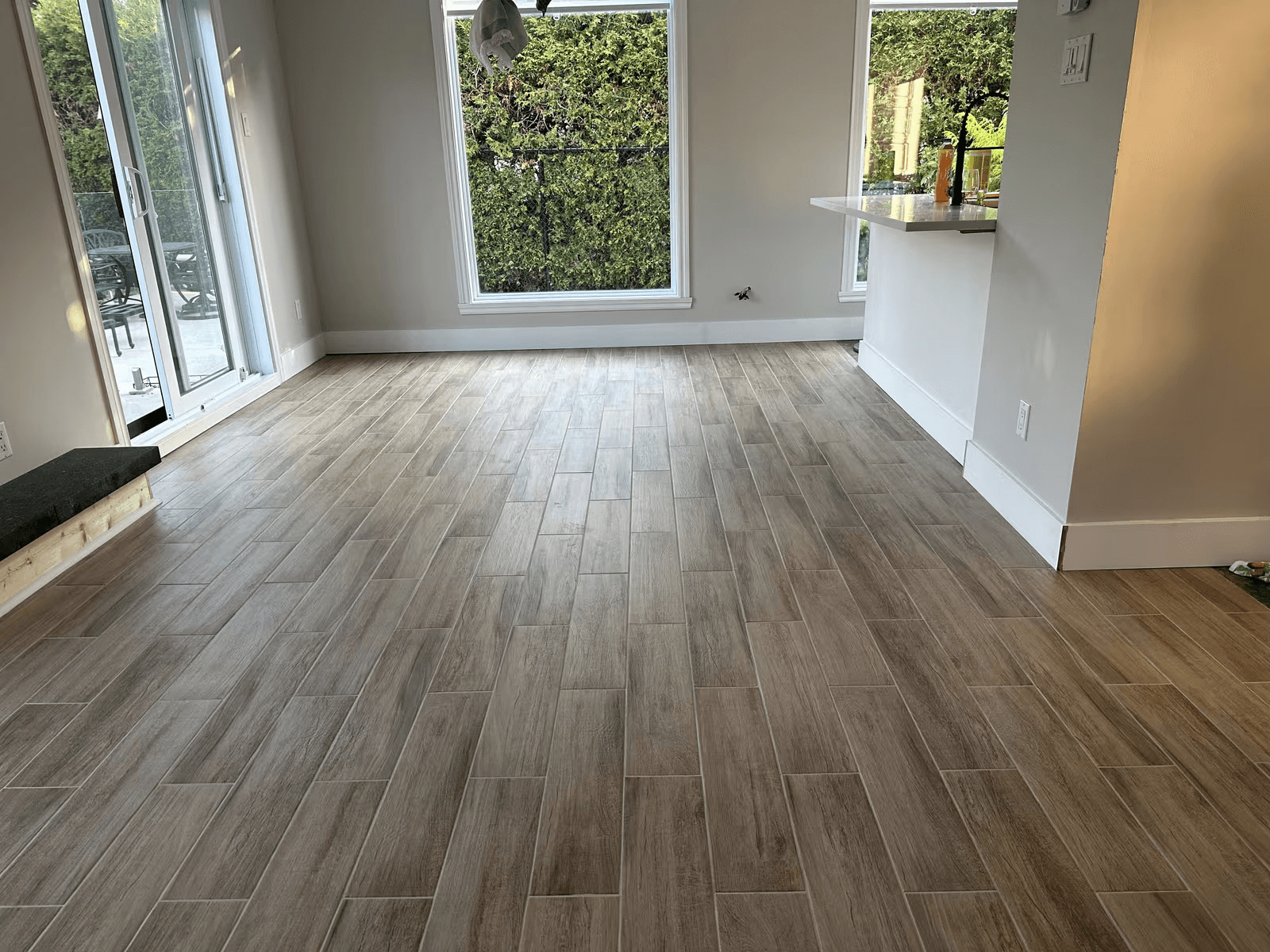
Source: InnoVecteur Construction
Total Installed Cost by Material
Floor type | Material Price | Labour Cost | Total installed |
Sheet vinyl | $1 to $4 | $0.60 to $2 | $2 to $6 |
Linoleum | $2.50 to $6 | $0.60 to $1.50 | $3 to $8 |
Laminate | $1.50 to $5.50 | $2 to $5 | $4 to $9 |
Carpet | $3.50 to $6 | $1 to $2 | $4 to $10 |
Vinyl plank and LVP | $2 to $7 | $2 to $4 | $4 to $11 |
Cork | $2.50 to $11 | $2 to $7 | $5 to $18 |
Rubber | $2.50 to $14.50 | $4 to $8 | $7 to $22 |
Bamboo | $4 to $14 | $3.75 to $5.75 | $8 to $19 |
Engineered hardwood | $5 to $12 | $3 to $8 | $8 to $20 |
$2 to $6 | $4 to $12 | $8 to $20 | |
Porcelain tile | $3 to $10 | $6 to $14 | $10 to $22 |
Solid hardwood | $5 to $15 | $4 to $10 | $11 to $25 |
Exotic hardwood | $8 to $19.50 | $4 to $10 | $14 to $30 |
Stone tiles | $6 to $14 | $8 to $16 | $15 to $30 |
Polished concrete | — | — | $3.75 to $15 |
Stamped concrete | — | — | $14.50 to $29 |
Epoxy | — | — | $3 to $12 |
The installed column is the one that matters, and it reflects what projects actually cost rather than the arithmetic extremes. Nobody pairs the cheapest material with the most expensive labour, so the real range is narrower than adding the two columns suggests.
Cost by Project Size
Area | Laminate | Vinyl plank | Engineered hardwood | Solid hardwood | Tile |
200 sq. ft. (bedroom) | $800 to $1,800 | $800 to $2,200 | $1,600 to $4,000 | $2,200 to $5,000 | $1,600 to $4,000 |
500 sq. ft. (main floor) | $2,000 to $4,500 | $2,000 to $5,500 | $4,000 to $10,000 | $5,500 to $12,500 | $4,000 to $10,000 |
1,000 sq. ft. | $4,000 to $9,000 | $4,000 to $11,000 | $8,000 to $20,000 | $11,000 to $25,000 | $8,000 to $20,000 |
1,500 sq. ft. (whole home) | $6,000 to $13,500 | $6,000 to $16,500 | $12,000 to $30,000 | $16,500 to $37,500 | $12,000 to $30,000 |
A full flooring project in a Canadian home typically runs $3,000 to $20,000, depending on material and area, with solid hardwood across a whole home reaching considerably higher.
Cost by City
Average cost for 500 square feet of vinyl plank, installed.
City | Budget | Standard | Premium |
Vancouver | $3,100 | $5,000 | $8,800 |
Toronto | $3,000 | $4,800 | $8,400 |
Calgary | $2,700 | $4,400 | $7,700 |
Ottawa | $2,700 | $4,400 | $7,700 |
Montreal | $2,600 | $4,200 | $7,400 |
Winnipeg | $2,200 | $3,600 | $6,300 |
Vancouver and Toronto run 33% to 40% above Winnipeg on identical work, driven almost entirely by labour rates.
The Main Flooring Materials
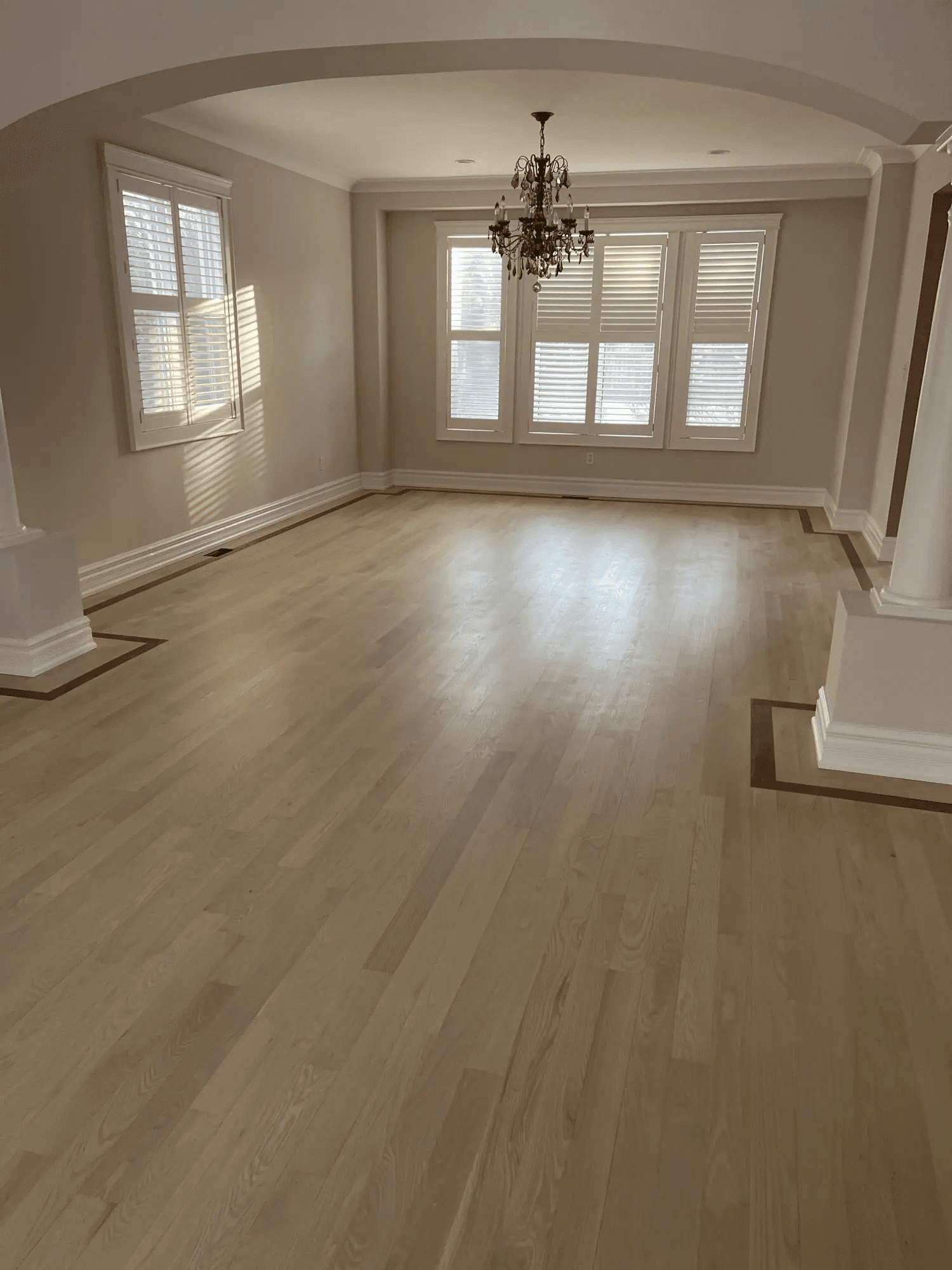
Source: A-10 Contracting Inc.
Solid Hardwood
Made from a single slab of solid wood, which gives a uniform finish floor-wide. Oak, maple, cherry, and ash are the common species, and their versatility keeps them appealing to buyers.
$11 to $25 per square foot installed. Exotic species like Brazilian cherry and mahogany run $14 to $30.
Hardwood requires upkeep on two cycles. A screen and recoat, which refreshes the top coat without sanding to bare wood, is done every three to five years. A full sand and refinish happens every seven to ten years or longer, at $3 to $8 per square foot.
In return it lasts 50 to 100 years and can be fully refinished several times, which no other material here offers.
Species, grade, and plank width drive the price. Wide-plank oak in a premium grade costs several times what narrow strip flooring does.
Engineered Hardwood
A thin layer of hardwood glued to a plywood base. It looks like solid hardwood, costs less, and handles humidity swings better, which matters in Canadian basements and condos.
$8 to $20 per square foot installed.
The veneer thickness determines refinishing potential. A thin wear layer under 2 mm cannot be refinished at all, while a thicker veneer allows one to three full refinishes over the floor's entire lifespan rather than on a recurring cycle.
Laminate
A high-density fiberboard core overlaid with a durable printed surface, available in wood and stone patterns. Mechanical click-lock joints make installation straightforward.
$4 to $9 per square foot installed, the most affordable practical option.
The abrasion rating tells you what you're buying. AC3 suits residential use, AC4 handles heavy traffic, and AC5 is commercial grade. Laminate flooring material resists water and humidity but cannot be sanded, so damage means replacing boards rather than refinishing.
Vinyl Plank and LVP
A layered construction including a wear layer, decorative film, core, and backing. Luxury vinyl plank is the fastest-growing category in Canada, and the reason is waterproofing: it handles bathrooms, kitchens, and basements that would destroy laminate or hardwood.
$4 to $11 per square foot installed.
Wear layer thickness is the quality indicator, measured in mils. Twelve mil suits residential use and 20 mil handles commercial traffic.
Ceramic and Porcelain Tile
Both excel in humidity-prone areas. Ceramic is made primarily from natural clay mixed with sand and water, then kiln-fired, which makes it smoother and more affordable. Porcelain uses finer, denser clay fired at higher temperatures, making it harder, less porous, and more expensive both to buy and to install.
$8 to $20 installed for ceramic, and $10 to $22 for porcelain.
Tile installation is slow, demands a flat substrate, and is unforgiving of error, which is why labour often exceeds the material cost.
Carpet
Still the choice where comfort matters most, particularly bedrooms and basements. It muffles footsteps, feels warm underfoot, and costs less than most alternatives.
$4 to $10 per square foot installed, including underlay.
Installation runs $1 to $2 per square foot, with glue-down at the lower end and loop or Berber slightly higher. Open-tread staircases carry additional fees.
Carpet stains more easily than hard surfaces and needs professional cleaning every 12 to 18 months to hold its warranty.
Alternative Flooring Options
Beyond the mainstream choices above, several materials suit specific rooms better than the obvious options do.
Alternative | Installed cost | Best suited to |
Sheet vinyl | $2 to $6 /sq. ft. | Laundry rooms, basements, rental properties |
Linoleum | $3 to $8 /sq. ft. | Kitchens, entryways, low-VOC requirements |
Concrete | $3.75 to $29 /sq. ft. | Basements, modern interiors, radiant heat |
Cork | $5 to $18 /sq. ft. | Kitchens, bathrooms, rooms needing insulation |
Rubber | $7 to $22 /sq. ft. | Home gyms, playrooms, workshops |
Bamboo | $8 to $19 /sq. ft. | Dry living areas, sustainability priorities |
Stone tiles | $15 to $30 /sq. ft. | Entryways, sunrooms, outdoor transitions |
When an Alternative Beats the Obvious Choice
Cork over hardwood in a kitchen, because it's water-resistant, warm underfoot, and quieter. It handles splashes but not standing water, which causes it to swell and discolour. Quality varies enormously, so buy from a specialized retailer, and note that cork fades under direct sun.
Engineered hardwood over solid in a basement or condo, since it tolerates humidity swings that would cup solid planks.
Sheet vinyl over LVP in a laundry room, where seamless installation matters more than appearance.
Rubber over anything in a home gym, where impact absorption is the whole point.
Stone tiles over ceramic in an entryway, where the durability justifies the cost on a small area. Stone needs periodic sealing and can require subfloor reinforcement.
Concrete over a covering entirely in a basement with radiant heat, where polishing the existing slab costs less than any new floor.
Bamboo and linoleum both carry a caveat. Traditional vertical and horizontal bamboo scratches easily and is susceptible to moisture damage, though strand-woven bamboo is compressed with resins and offers considerably better dent and scratch resistance. Linoleum, made from linseed oil, pine resin, and cork dust, is long-lasting and quiet but unsuited to damp settings.
Highly Textured Floors
This is the one category where cost comparisons break down. Hand-scraped and wire-brushed hardwood, textured stone tiles, and heavily embossed laminate all carry a premium of $1 to $4 per square foot over their smooth equivalents.
They hide scratches, scuffs, and pet damage far better than a smooth finish, which makes them worth the premium in a busy household. The trade-off is cleaning, since texture holds dirt.
They also complicate subfloor repair. A textured floor telegraphs an uneven base more visibly than a smooth one, so prep work matters more rather than less.
Floating Floors
Not a material but an installation method. Planks interlock and rest on the subfloor without fasteners or adhesive, which makes installation fast and the floor removable.
Laminate, LVP, engineered hardwood, and some cork and bamboo are all available as floating systems, and it's the format that makes DIY realistic.
Installation and Labour Costs
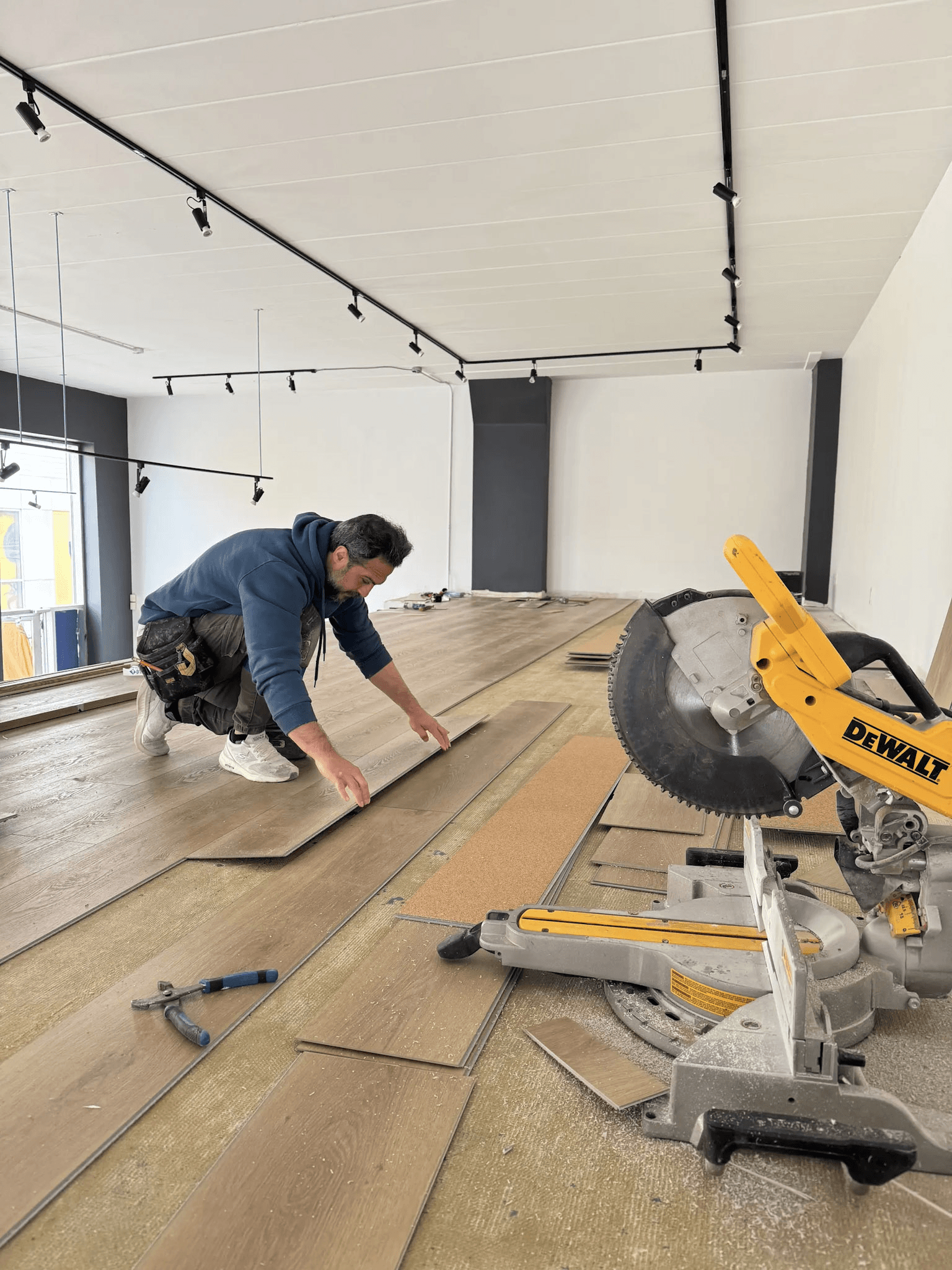
Source: H&L complete Flooring
Labour is the half of the equation most price guides skip, and it's where two quotes on the same house differ most.
Labour Rates by Material
Material | Labour per sq. ft. |
Sheet vinyl and linoleum | $0.60 to $2 |
Carpet | $1 to $2 |
Vinyl plank and LVP | $2 to $4 |
Laminate | $2 to $5 |
Cork | $2 to $7 |
Engineered hardwood | $3 to $8 |
Solid hardwood | $4 to $10 |
$4 to $12 | |
Porcelain tile | $6 to $14 |
Stone tiles | $8 to $16 |
Click-together planks are the cheapest to install because they need no adhesive, no fasteners, and minimal subfloor work. Tile and stone are the most expensive because they're slow, unforgiving, and require a perfectly flat substrate.
Labour Rates by Province
Province | Vinyl plank | Laminate | Tile |
British Columbia | $2.75 to $4.75 | $2.75 to $4.75 | $4.25 to $7.25 |
Ontario | $2.75 to $4.75 | $2.25 to $4.25 | $3.25 to $5.25 |
Alberta | $2.15 to $4.15 | $2.15 to $4.15 | $3.15 to $5.15 |
Quebec | $2.15 to $3.15 | $2.15 to $3.15 | $3.65 to $4.65 |
Some Toronto installers quote starting labour as low as $1.50 per square foot for laminate and vinyl plank. Those are entry prices for straightforward work on a sound subfloor, and they rise quickly once prep, transitions, or complex layouts enter the picture.
What Drives Labour Up
Installation complexity: A rectangular room with no obstacles installs faster than one with angles, islands, or built-ins.
The installer's experience level: Established contractors charge more and make fewer mistakes on difficult materials.
Local competition and market demand: Spring and summer are peak season in most Canadian markets, and rates reflect it.
Logistics: Walk-ups, condo elevator bookings, and restricted parking all add hours before anyone touches the floor.
Stair installation: Priced per step rather than per square foot, and considerably more than flat area.
Hiring a Flooring Contractor
Confirm three things before signing.
Bonded and insured: Request the certificate rather than an assurance, particularly in a condo where the building will ask for it.
Licensing requirements: These vary by province and municipality, and tile and hardwood work in particular may carry local rules.
Workmanship and labour guarantees: One to two years is standard, and it should be separate from the manufacturer's product warranty.
Primary Factors Affecting Cost
Material and Style
The range runs from $2 to $30 per square foot installed, and material choice accounts for most of it.
Within a material, product origin, finishing treatments, and grade all move the price. Hardwood must be sanded, varnished, and polished to reach its final appearance, and each step adds cost.
Style isn't always quality. Trendy materials command premiums that don't always reflect durability, and a fashionable floor that wears out in eight years costs more than a plain one lasting twenty.
Plank Size and Layout
Plank width: Wide planks cover ground faster and often install cheaper, though the material itself usually costs more.
Plank style and thickness: Thicker boards cost more and feel more substantial underfoot. On engineered hardwood, thickness also determines refinishing potential.
Layout complexity: Herringbone, chevron, and parquet patterns can double installation labour.
Customization: Borders, inlays, and mixed-width installations all add hours.
Room Shape and Size
A larger area needs more material and more labour, but the relationship isn't linear. Rectangular and square rooms cost less per square foot than irregular ones, because complex shapes mean more cuts, more waste, and more time.
Round rooms, angled walls, and rooms with numerous obstacles all carry a premium.
Subfloor Preparation
This is the most common source of surprise charges.
Levelling an uneven subfloor runs $1 to $3 per square foot. Moisture sealing, subfloor repair, and installing a moisture barrier each add more.
The subfloor determines whether the finished floor lasts, and no quality of material compensates for a bad base.
Removing the Old Flooring
Existing floor | Removal cost |
Carpet | $1 to $2 per sq. ft. |
Vinyl or laminate | $1 to $3 per sq. ft. |
Hardwood | $2 to $4 per sq. ft. |
Tile | $2 to $5 per sq. ft. |
Tile is the most expensive to remove because it's bonded to the substrate and often takes the underlay with it. Multiple layers of old flooring compound the cost.
Secondary Cost Considerations
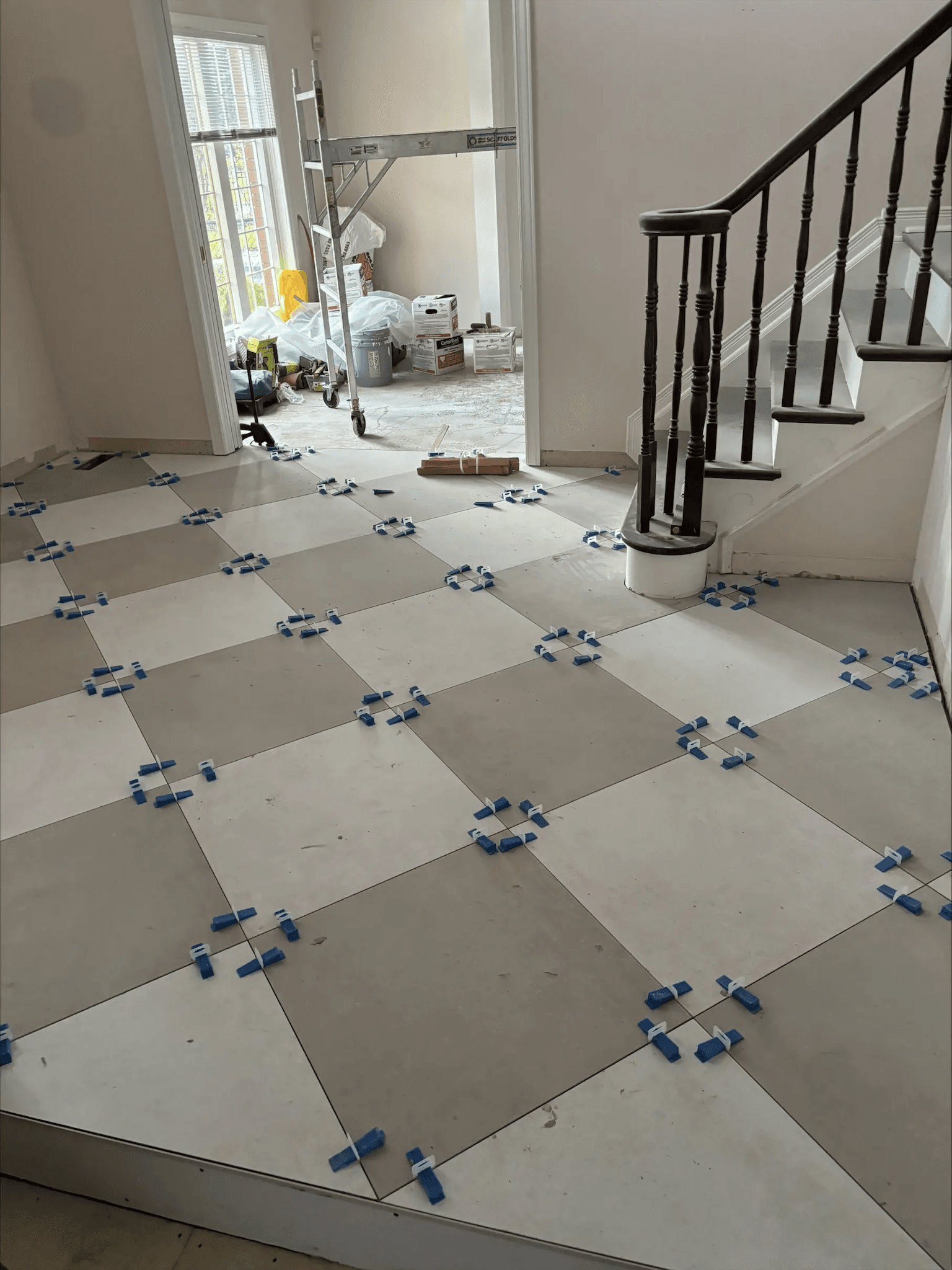
Source: 11276140 Canada Inc
Underlay: $0.50 to $1.50 per square foot, and mandatory in most condos for sound attenuation.
Moisture barrier: Required over concrete slabs and in basements, sometimes integrated into the underlay.
Baseboards: Removal and reinstallation is often necessary, and damage means paint touch-ups or replacement.
Shoe mouldings and decorative trims: Trim and moulding installation is priced per linear foot and adds up across a whole floor.
Transitions and thresholds: Every doorway and material change needs one.
Post-project cleanup: Confirm whether it's included or billed separately.
Ongoing Costs After Installation
The quote covers installation. Two recurring costs follow it.
Refinishing applies to hardwood on two cycles: a screen and recoat every three to five years, and a full sand and refinish every seven to ten years at $3 to $8 per square foot. Engineered hardwood can be fully refinished one to three times total depending on veneer thickness, and thin-veneer products not at all. Laminate, vinyl, and tile can't be refinished, which is a cost advantage and a lifespan limitation at once.
Professional cleaning matters most on carpet, where hot-water extraction every 12 to 18 months costs $200 to $500 and is usually required to keep the manufacturer's warranty valid.
Insist on Detailed Estimates
A single number tells you nothing. Detailed estimates should break out material, labour, underlay, removal, prep work, trim, and cleanup as separate lines.
That's the only way to compare two quotes, and it's how you find out whether the cheaper one has simply assumed your subfloor is sound.
How to Save on Flooring
Start with realistic budgeting: Price material, labour, removal, underlay, and trim separately before shopping. Project costs overrun most often because the first three were budgeted and the last two weren't.
Choose click-together planks: Laminate and LVP in floating formats cost the least to install and make DIY installation realistic, saving $2 to $5 per square foot in labour.
Order in volume: High-volume orders earn supplier discounts, and flooring the whole house at once spreads the installer's setup cost across more area.
Compare narrower planks against wide: Narrower planks usually cost less in material but take longer to install. On a labour-heavy format the wider board often wins on total cost.
Buy your own tools and materials for a DIY job: A pull bar, tapping block, spacers, and a decent saw run $150 to $400 and are reusable. Renting the saw alone cuts that considerably.
Ask about remnants and discontinued lines: Retailers discount end-of-run stock substantially, and a bedroom often fits within one.
Handle removal yourself: Tearing out carpet saves $1 to $2 per square foot, though disposal still needs arranging.
Book off-season: Fall and winter are quieter in most Canadian markets.
Where not to economize: subfloor installation and underlay. Both are invisible once the floor is down, and both determine whether it lasts.
DIY or professional installation?
When DIY Works
Click-and-lock laminate flooring and LVP are genuinely DIY-friendly. They need basic tools, no adhesive, and no fasteners, and a confident homeowner can floor a bedroom in a weekend.
You'd save $2 to $5 per square foot in labour, which on a 500 square foot project is $1,000 to $2,500.
Check your warranty first. Some manufacturers void product warranties on floors not installed professionally, which can matter more than the labour saving.
When to Hire
Tile and stone tiles: Slow, unforgiving, and dependent on a perfectly flat substrate.
Glued installations: Glue-down engineered hardwood and parquet demand precision that's hard to achieve without practice, unlike floating click-lock systems.
Nailed hardwood: Solid hardwood is nailed or stapled to the subfloor and needs a flooring nailer plus the experience to use it.
Oddly shaped spaces: Angles, curves, and obstacles multiply the cuts and the waste.
Stair installation: Fitting flooring to stairs is a specialist skill, and mistakes are visible from every angle.
Subfloor levelling: If the base needs work, that work determines the outcome.
Installation precision is what you're paying for. A floor laid out of square, with inadequate expansion gaps, or over an uneven base will telegraph the error within a year.
Professionals also bring specialized equipment, from flooring nailers to wet saws, that isn't worth buying for one job.
What should you budget?
For most Canadian homeowners, new flooring costs $5 to $12 per square foot installed, which puts a 500 square foot project at $2,500 to $6,000 and a whole-home job of 1,500 square feet at $7,500 to $18,000. Those figures assume mid-range materials. Solid hardwood across the same 1,500 square feet reaches $37,500.
Two things move the number most. Material choice spans $2 to $30 per square foot installed, and it's the largest single decision. Subfloor condition is the largest unknown, since levelling adds $1 to $3 per square foot and isn't visible until the old floor comes up.
Get three itemized quotes covering material, labour, removal, prep, underlay, and trim separately. The cheapest quote is usually the one assuming your subfloor is fine.
Frequently Asked Questions
How much does new flooring cost?
$4 to $25 per square foot installed in Canada, with most homeowners paying $5 to $12 for mid-range materials. A 500 square foot project runs $2,500 to $6,000 at that rate, and a whole home of 1,500 square feet costs $7,500 to $18,000. Premium materials push considerably higher, with solid hardwood reaching $37,500 across the same area.
How much does it cost to install 1,000 square feet of flooring?
$4,000 to $9,000 for laminate, $4,000 to $11,000 for vinyl plank, $8,000 to $20,000 for engineered hardwood or tile, and $11,000 to $25,000 for solid hardwood.
How much does flooring installation cost per square foot?
Labour alone runs $0.60 to $2 for sheet vinyl and linoleum, $1 to $2 for carpet, $2 to $5 for laminate and vinyl plank, $3 to $10 for hardwood, and $4 to $16 for tile and stone. Rates are highest in BC and Ontario and lowest in Quebec and the Prairies.
What is the cheapest flooring to install?
Sheet vinyl at $2 to $6 per square foot installed, followed by laminate and carpet at $4 to $10. Laminate offers the best balance of low cost and durability, and its click-together format makes DIY realistic.
How much does it cost to install 1,000 square feet of hardwood in Canada?
$11,000 to $25,000 for solid hardwood installed, or $8,000 to $20,000 for engineered. Exotic species push toward $30,000. Oak and maple are the most affordable solid species at $11 to $18 per square foot installed.
Does cheap flooring mean poor quality?
Usually, within a material category. A premium vinyl plank will outlast a budget one. Across categories it's less reliable: high-quality flooring in laminate outperforms poor hardwood in a basement, and the right material for the room matters more than the price tier.
How do I calculate my flooring cost?
Measure the square footage, add 10% for waste and cuts, then multiply by the total installed cost per square foot for your material. Add removal, subfloor prep, and trim. Get installation estimates to confirm, since local labour rates vary by up to 40% across Canadian cities.
What is an abrasion rating?
A durability measure for laminate, graded AC1 through AC5. AC3 suits residential use, AC4 handles heavy traffic and light commercial, and AC5 is commercial grade. A higher rating costs more and lasts longer in busy rooms.
Do I need underlay?
Almost always. It costs $0.50 to $1.50 per square foot, improves sound and comfort, and is mandatory in most condos for sound attenuation. Over a concrete slab you also need a moisture barrier, which some underlays include.
How much does it cost to remove old flooring?
$1 to $2 per square foot for carpet, $1 to $3 for vinyl or laminate, $2 to $4 for hardwood, and $2 to $5 for tile. Tile is the most expensive because it's bonded to the substrate and often damages the underlay coming out.
Can I install flooring myself?
Click-and-lock laminate flooring installation and vinyl plank are genuinely DIY-friendly and save $2 to $5 per square foot. Tile, stone, glued or nailed installations, stairs, and oddly shaped rooms should go to a professional. Check your product warranty first, since some are void without professional installation.
Which flooring is waterproof?
Luxury vinyl planks, sheet vinyl, tile, and stone are genuinely waterproof. Laminate and cork are water-resistant but not waterproof. Hardwood, engineered hardwood, and bamboo are not, which rules them out for bathrooms and most basements.
How much does refinishing hardwood cost?
$3 to $8 per square foot for a full sand and refinish, needed every seven to ten years on solid hardwood. A screen and recoat between those cycles, every three to five years, costs less. Engineered hardwood can be refinished one to three times total depending on veneer thickness, and laminate and vinyl can't be refinished at all.
Looking for something else?
Related articles
The latest industry news, interviews, technologies, and resources.
Cynthia Pigeon
•18 Jun 2026
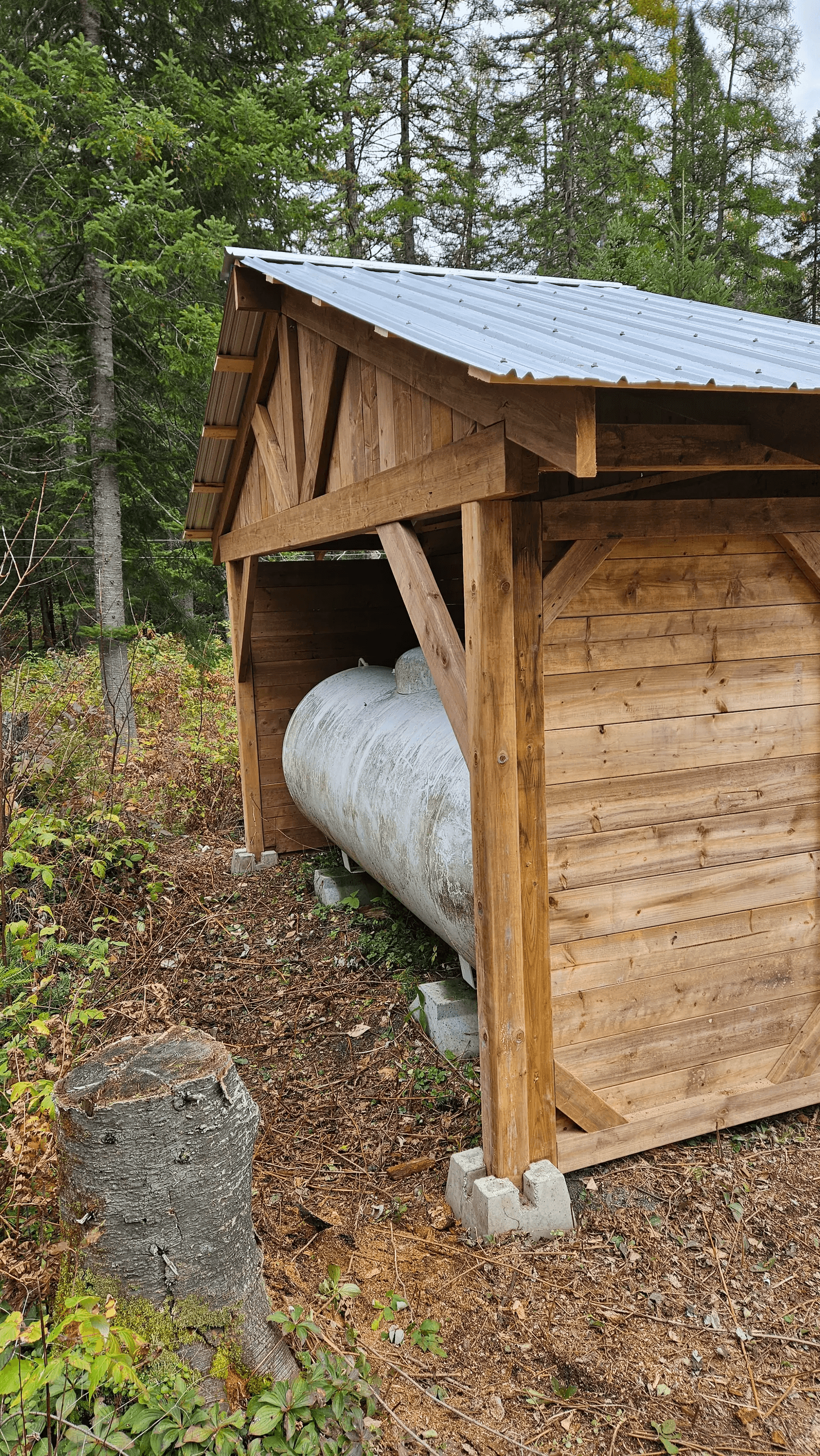
If you own a property in Quebec with an aging oil heating system, the question of removing it will come up sooner or later. Whether it is part of a real estate transaction, an insurance requirement, or a firm decision to reduce your carbon footprint, dismantling an oil tank, also known as a fuel oil tank, is an essential step in a residential energy transition.
Editorial Team
•12 May 2025
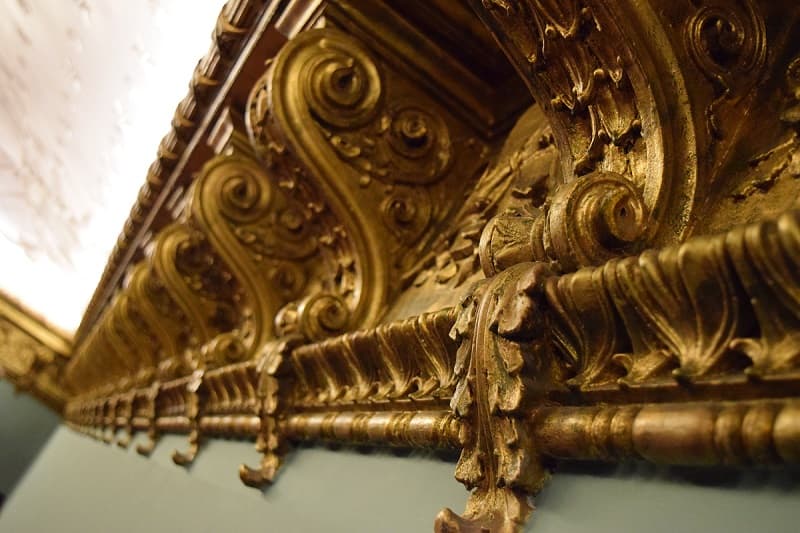
Crown moulding has been a decorative staple dating as far back as ancient Greece. This is likely due to the fact that they understood how much it can help liven up a space. The name refers to a family of mouldings which are aesthetically designed to shape and accentuate the top edge where the ceiling meets the wall.
Editorial Team
•08 Nov 2023
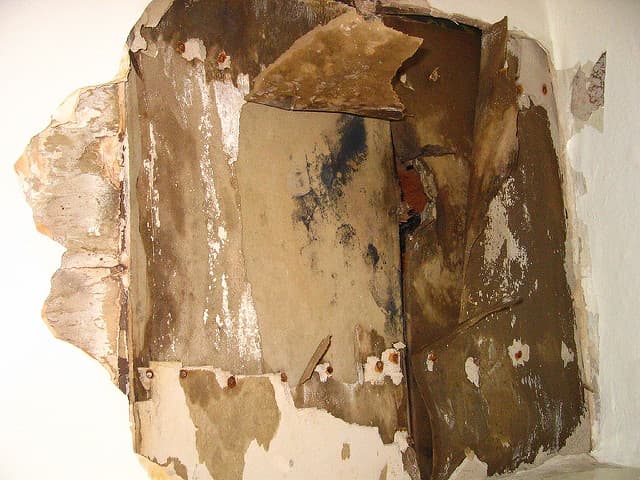
Organic materials such as wood, drywall boards, and dust combined with water or moisture for more than 48 hours become favourable environments for mould growth.
Cynthia Pigeon
•23 Jul 2025
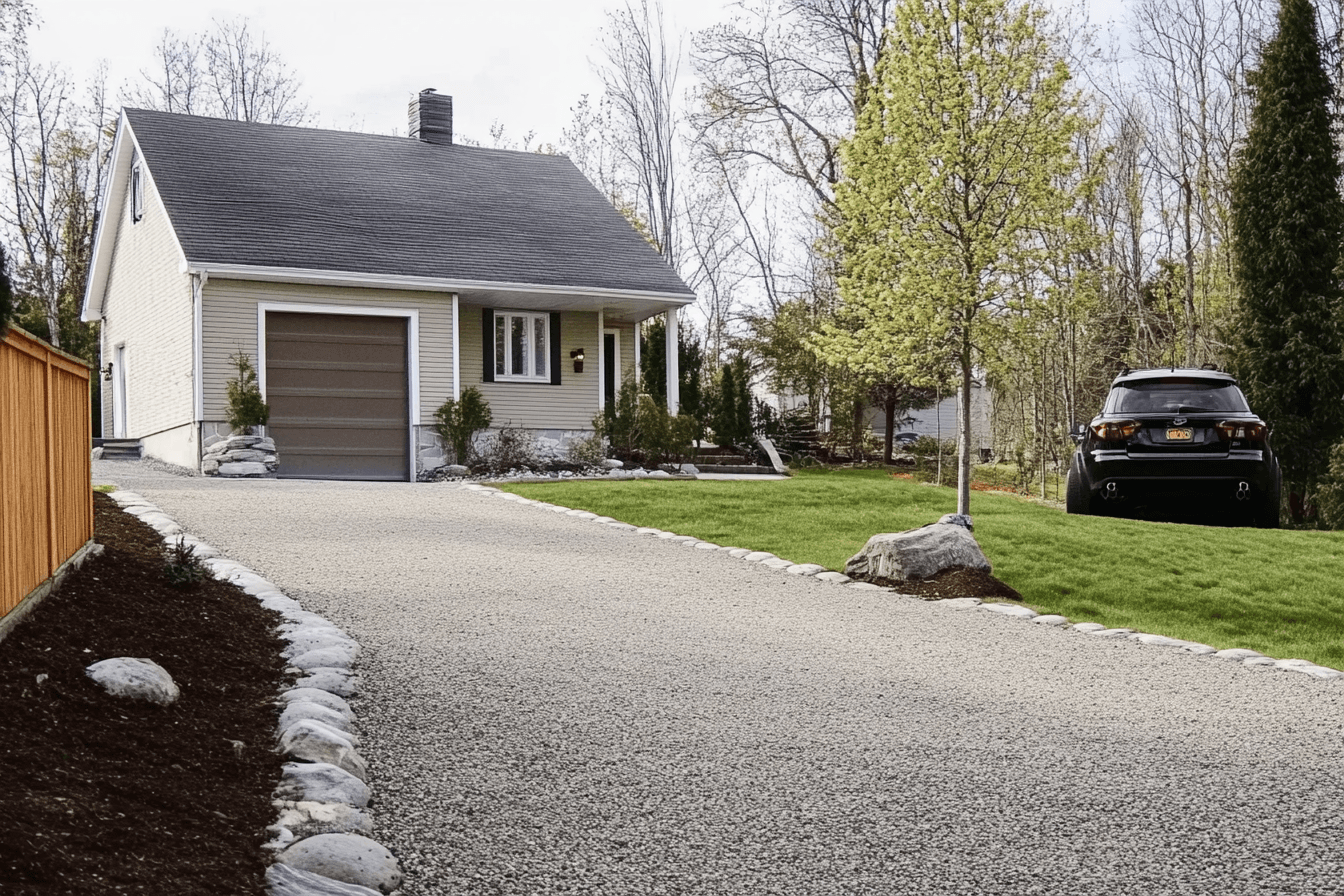
It goes without saying that asphalt is usually the first material that comes to mind when considering a new driveway. However, there are other options on the market that are just as durable and aesthetically pleasing.
Editorial Team
•10 Jun 2026
The proper front yard landscaping can completely change how your property looks from the street. A thoughtful front yard design makes the entrance feel welcoming, improves curb appeal, and helps your home look more polished throughout the year.