Choosing your Hardwood Floors: the Materials
By Léa Plourde-Archer
Updated on November 8, 2023
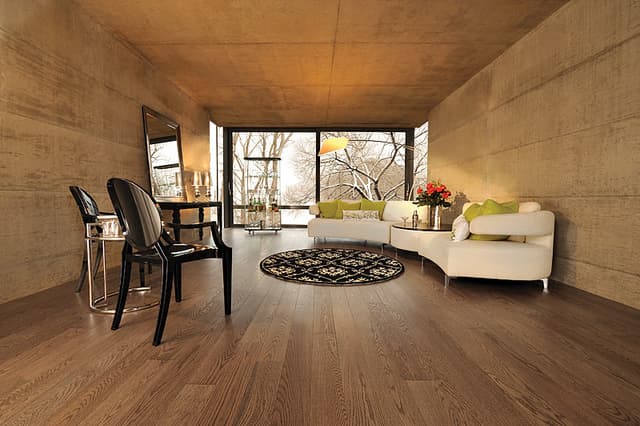
Deciding to replace your current floor is a process that should not be taken lightly. Not only is it a major financial investment, but it also takes time. Which material is best? Which colour?
Opting for hardwood floors creates another set of questions that are also very important when looking for top results. Let’s talk more about hardwood floors.
So, you’ve decided that you’re opting for a hardwood floor. This option works well nearly throughout the house. In addition to being both natural and very stylish, hardwood requires little maintenance. Numerous options are available, with different types and styles (colour, essence, gloss, etc.) on the market.
Moreover, this is just the beginning of the decision-making process. It’s important to look over all the available options to make an informed choice. The money invested in this new flooring will be worth it; with a new floor covering that is very durable, whether it be in the bedroom, the living room or the dining room.
Hardwood floors: the different types of materials
This is probably the most important choice you’ll have to make throughout the process. There are three main options: solid hardwood, engineered wood without glue or nails (also known as “floating floor”) and engineered hardwood.
Solid hardwood floor
If you choose solid hardwood, the material will be sanded after it has been installed. The same goes when applying stain and varnish. When applied after the installation process, varnish won’t last as long as if it had been applied in a factory setting, since it is harder to control environmental conditions in a house. Another small disadvantage is the fact the occupants will have to leave the house when the product is being applied and stay out for the duration of the drying period since the vapours emanating from the stain and varnish are harmful and can pose health risks.
However, there is an alternative: pre-varnished solid hardwood. Each piece of wood is sanded, stained and varnished in the factory. The only thing left is the installation process. It should be noted that solid hardwood floors and not recommended for basements as they do not offer good resistance against humidity.

Photo: Pixabay
Engineered wood floor (without glue or nails)
Another good option to consider: engineered wood without glue or nails, better known as ''floating floor''. As the name indicates, this type of flooring is neither glued nor nailed to the ground. To install it, one must simply slot the floorboards one into the other.
A floating floor is also a more eco-friendly option. Since it isn’t permanently secured to the floor- which doesn’t mean that the boards will move around easily- the floor can be detached piece by piece and used in another room.
Do you want to know how to install a floating floor? Read our article on the subject.
Engineered hardwood floor
The third option is engineered hardwood. A small coat of hardwood is attached to a base that is made of plywood or fiberboard. This option works well for basements or rooms with high humidity levels.
Glued directly to the ground or stapled to a subfloor surface, the boards end up being more stable than with other types of hardwood floors. Take note that this type of floor is highly recommended for condominiums. Moreover, some types of engineered hardwood floors can be sanded and refinished to expand their life expectancy.
Working with a professional flooring installation company
Since it represents a lot of money being invested, working with a flooring specialist will ensure optimal results. This is important because such a project is not something we do each week, therefore the results need to reflect all the beauty associated with hardwood floors!
However, take note that if you're skilled enough, you could be able to install a hardwood floor without glue or nails, since the installation process for this one is less complex.

Photo: Flickr
How to choose your hardwood floor based on your house
When comes time to change floor coverings, it is important to consider the type of house in which it is being installed. In a single-family house, one will check the subfloor surface to see which of the three options is best, whereas, for a condominium, the owner’s agreement will have to be verified to make sure that all sound insulation standards are respected.
Once the type of flooring has been chosen, the next decisions to be taken will be about the colour, essence, gloss, size and orientation of the floorboards. Finally, the new flooring will be installed.
Do you want to learn more about hardwood floors? Read our Flooring Renovation Guide.
Get 3 renovation quotes for your hardwood floor renovation project
RenoQuotes.com will put you in contact with 3 reliable contractors for your hardwood floor renovation project. Fill in the form on our homepage (it only takes a few minutes), and you will receive quotes from trusted professionals.
Dial 1-844 828-1588 to speak with one of our customer service representatives
Looking for something else?
Related articles
The latest industry news, interviews, technologies, and resources.
Editorial Team
•10 Sep 2026
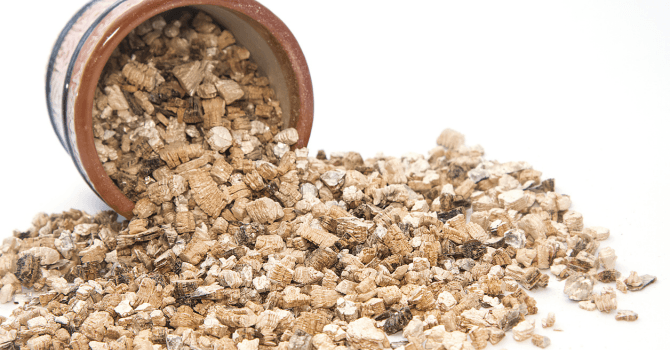
Vermiculite, the insulation that every homeowner who bought a home built before 1990 dreads finding, has made headlines many times for all the wrong reasons.

Cynthia Pigeon
•08 Nov 2023
Are you thinking about purchasing an air exchanger to improve the comfort level in your home? If you want to get the most out of this device, installation is key.

Editorial Team
•08 Nov 2023
The bedroom is the definite haven of the home. Depending on your living arrangements, this room may be the only space offering you a little bit of peace, quiet and privacy. Of course, you’ll need it to be as organized as possible if you’re spending endless hours tucked away in your bed.
Editorial Team
•08 Jun 2026
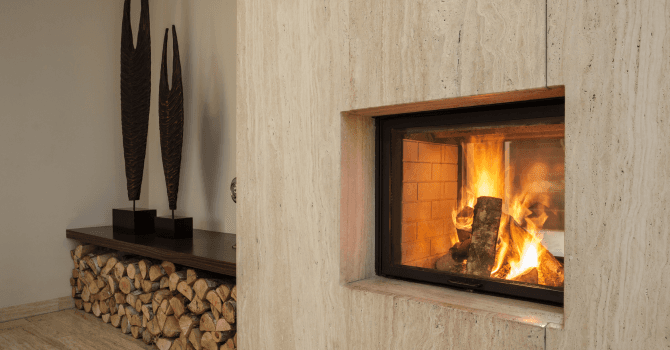
In many Canadian regions, fireplaces become the heart of the home for 3 out of the 4 seasons. The wood crackling in the hearth, the comforting smell of burning wood, and the cozy ambience of the room—whether we consciously acknowledge it or not—all contribute to a fireplace's undeniable charm.
Editorial Team
•04 Oct 2024
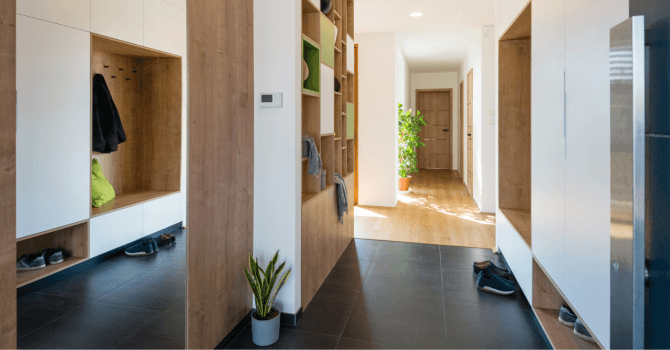
Your home's entryway is a fairly important space as it's the first space your guests occupy as they are invited in. Naturally, this means the entrance is a very high-traffic area and its floor will consistently come into contact with dirt, mud, and water just to name a few of the elements.