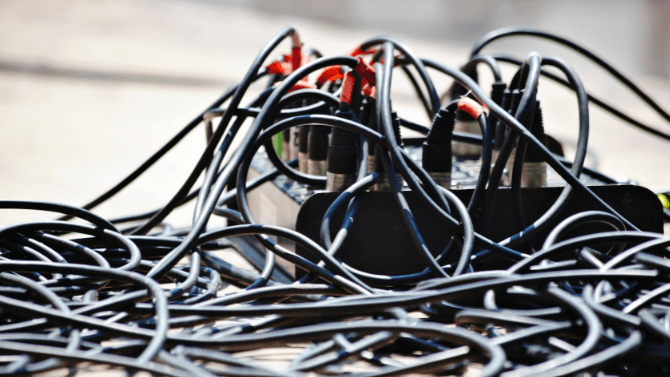
Electrical wires are essential, yet visually undesirable. They can, at times, cramp your décor, further encombering your spaces at floor level—all stuff one could do very well without.
To sidestep such challenges, here’s a rundown of all of our top tips and tricks to conceal cords or how to use them to your advantage for a flawless setting.
How to Design Your Home Around Electrical Wires
Source: Canva
Create a Decorative Pattern
While the first thing that might pop into your head is to conceal cables as much as possible, the opposite might just be a more interesting way to go about it. Whether your wires run up and down your walls, you can use them to your advantage to create a decorative pattern to your liking by stapling the cable in question to the wall. Naturally, the cable in question must be long enough to allow you to design a detailed pattern and be visually appealing.
Staple the Wire and Conceal It with Paint
Another crafty little trick consists of stapling the wire to the wall in a more conventional way (ideally above baseboards), but painting it so it meshes with the wall and its colour. Note that said step isn’t always a prerequisite as most moulding is already in a shade of white. This is a commonly sought-after solution because it barely costs a thing and requires few tools or equipment.
Route Wires Through Cable Management Boxes
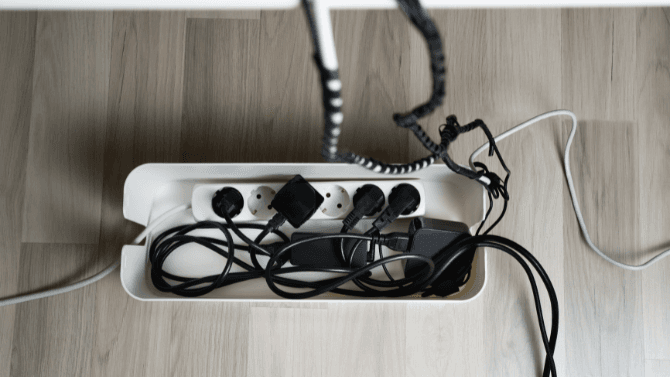
Last but surely not least in our list of crafty ways to blend your wires and cables with your décor, is building a small storage box with exits on the back (to connect or disconnect wires). These cable organizers are handy for router and modem cables to tidy up your work area and streamline your cleaning routine. You can also use cord storage boxes to store your phone, home theatre, or television cables. All there’s left to do is adapt the boxes according to your décor, and there you have it!
How to Conceal Electrical Wires
Source: Canva
Wall Cable Raceways
Do you want to forget about wires in your home completely? Using plastic cable raceways is one of the best ways to do so. Wall raceways are made up of two distinct parts, allowing you to conceal all your wires in the blink of an eye. Simply line up the baseboard covers with the bottom of your wall, securing it with dual adhesive tape. Then, insert the cables. Lastly, slide the top section of the raceway in place, securing it over the section attached to the wall.
Note the PVC cord covers are also available in wood-like finishes to better suit a wider range of home décors. Amongst the available finishes are mahogany, walnut, birch, and beech. Some models can also be painted.
Baseboard Cord Channels
To hide all cables and wires that are routed above your baseboards, get yourself some baseboard cord channels. These are typically made of wood and are an effective way to conceal wires at the bottom of a wall. Moreover, given the wide array of baseboard cord concealers retailed, you’re sure to find one that’s suited to your décor and the layout of the room in question.
Secondary Walls
Should the space allow it, you can always add a secondary wall, effectively concealing all cables and wires. Note that the concept of adding another wall doesn’t mean a standard wall, one just as thick as a conventional wall made of gypsum boards. It actually just entails building a thinner partition in which wires can be subtly concealed. Wood is often used to build such a partition as it perfectly suits modern and rustic aesthetics.
Exposed Beams
If you’re lucky enough to bask in the rustic charm of simply stunning exposed ceiling or wall beams, make the most of it by securing stray cords to their upper section. Without a doubt, the beams in question must be big enough to conceal the wires and cables in the gap where the beam and wall/ceiling intersect.
Hiding Hanging Cords
Hooks
Self-adhesive hooks are rather useful to prevent one from tripping over random cords or computer cables. Simply stick some hooks along the edges of a desk, lining them up with the cords so the latter can hang behind the desk instead of hindering foot traffic. Since most self-adhesive hooks are retailed in a shade of white, you can always paint them if need be to try to conceal them with the furniture’s colour.
Desk Cord Tray
Desk cable tray organizers are sold in most hardware stores and are horizontal supports with an upturned side. These are typically secured to the topmost section of a desk’s back panel to store cables. They’re rather worthwhile given their low cost and subtlety.
FAQ
Source: Canva
How to Conceal or Cover Cables/Cords for Wall-Mounted TV?
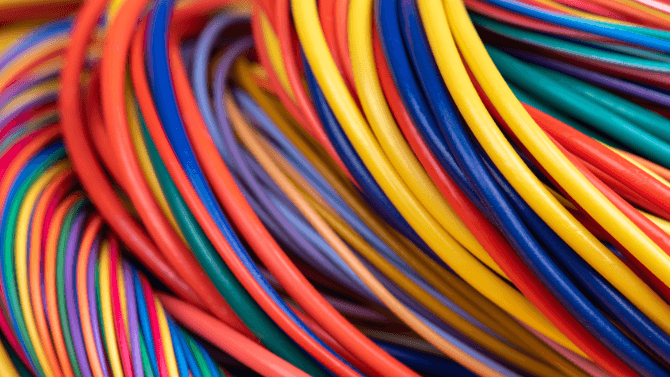
In many cases, when people want to hide wires in their home, it's because they have a TV mounted on the wall with cables hanging down, which is quite displeasing to look at. Here is a fairly easy way to conceal those pesky cables: hiding them within the wall.
Although this may not be the easiest option, it is by far the cleanest. This method involves cutting two holes in the wall—one near the TV and another by the power outlet—installing low voltage brackets or boxes, and running the wires through these points. This setup makes the cords virtually invisible, creating a clean look between the TV and the console or cabinet below.
For those who are willing to go the extra mile, consider placing or installing power strips, entertainment consoles, USB ports, DVD players, and other accessories in the back of a drawer or cabinet below the television to maintain a clutter-free floor space.
Sidenote: When mounting your TV, always remember to use a stud finder!
Are you planning an electrical wiring project and hoping for a ballpark cost? Check out our related article Cost of Electrical Renovations in 2024.
Get 3 renovation quotes for your electrical project/lighting project
RenoQuotes.com will put you in contact with 3 reliable contractors for your home lighting project. Fill in the form on our homepage (it only takes a few minutes) and get quotes from trusted professionals.
Dial 1-844 828-1588 to speak with one of our customer service representatives.
Looking for something else?
Related articles
The latest industry news, interviews, technologies, and resources.
Editorial Team
•24 Oct 2024
Hot water usage is one of the biggest contributors to household energy bills, especially in Australia where hot water is essential for everyday living. Rising energy costs have made it more important than ever to find ways to reduce hot water expenses, without compromising on comfort. With some simple changes, you can lower your energy consumption and save money.
Collaboration
•11 Aug 2025
Dead outlets often result from tripped breakers, faulty wiring, or overloaded circuits. While resetting the breaker or checking connections may resolve minor issues, persistent problems could indicate deeper electrical faults. For complex situations, professional assessment is crucial to make sure safety and proper repairs. Understanding these causes helps homeowners address electrical troubleshooting effectively and maintain a reliable power supply throughout their homes.

Editorial Team
•09 Oct 2024
Adopting sustainable building practices in Quebec means aligning with the ongoing global evolution. Makenzie Lystrup, director of NASA’s Goddard Space Flight Center, emphasized this vision by taking an oath on Carl Sagan’s book, reminding us that our planet is but a small pale blue dot amidst the vastness of the universe.
Cynthia Pigeon
•30 Jan 2025
A home’s entryway rarely is made a priority when it comes to home remodelling and renovations. Usually, when it comes to organizing this space, it is most likely centred around functionality, embellished with a few decorative elements to make the space more inviting as a whole.

Cynthia Pigeon
•19 Aug 2025
Whether you are a specialized or general contractor, the success of your business is something you hold on to dearly. As a matter of fact, the ability to swiftly and judiciously collaborate is essential to carrying out any project.