Industrial Paint and Other Coatings—What Are Your Options?
By Editorial Team
Updated on May 11, 2026
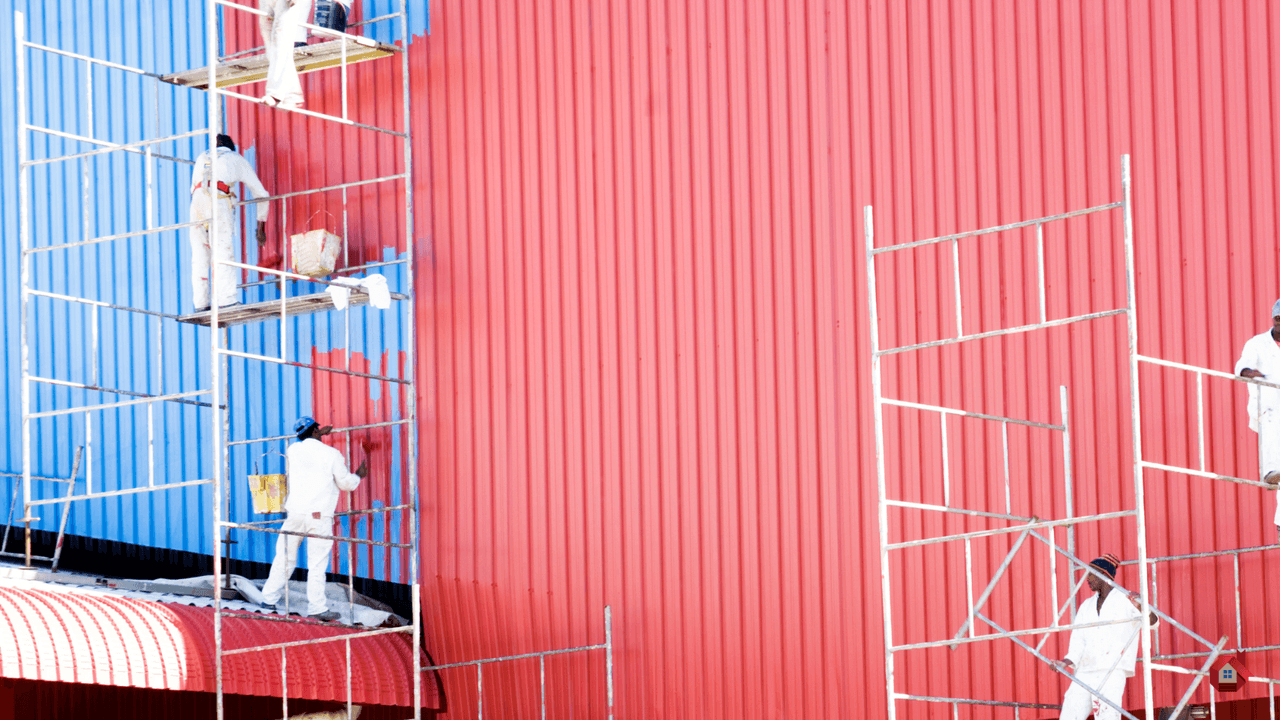
One might think that the paint used on residential structures is the same as that used for commercial or industrial buildings. However, commercial buildings have their own set of by-laws, regulations, and maintenance requirements.
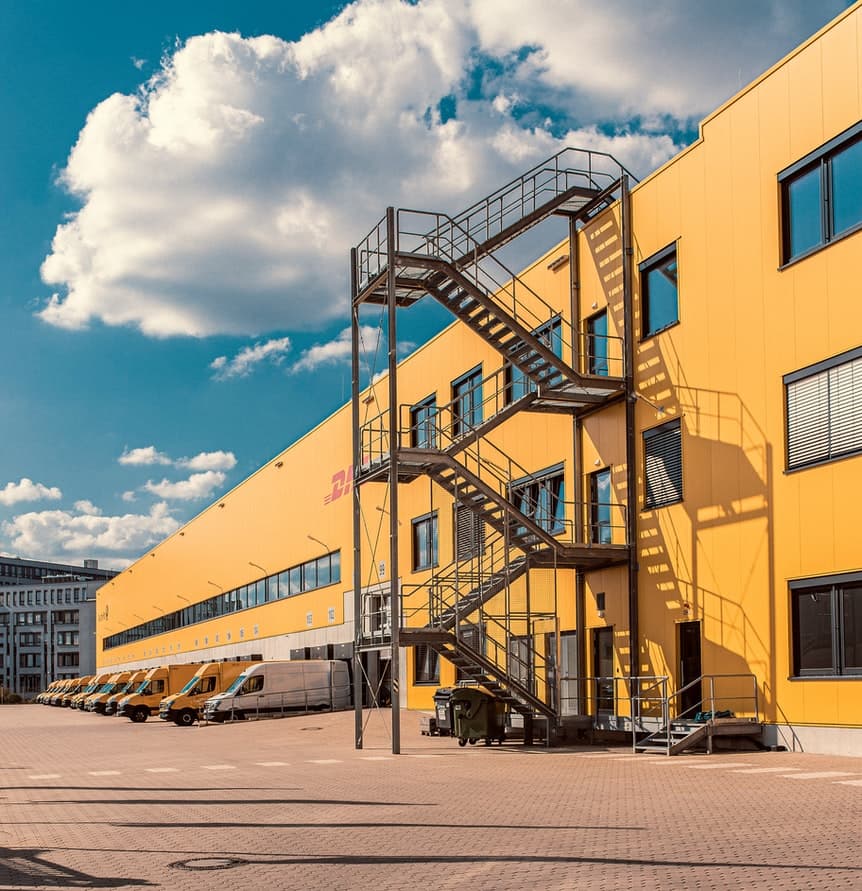
Whether used as a manufacturing plant, distribution centre, or warehouse, an industrial building needs a specific coat of paint on its exterior facades.
So, how can you choose the right product for your industrial building? What are the different types of industrial paint? What are their advantages and disadvantages?
If you’re looking for information on this subject, then you’ve come to the right place; read on!
What Are the Different Types of Industrial Paints and Coatings?
1- Epoxy paint
Typically, epoxy paints are made up of two things: a base and a curing agent. This type of paint can be used inside or with other industrial products simultaneously. Epoxy paint is resistant to chemical product exposure, abrasions, and moisture.
This type of paint is also heat-resistant. Many facilities choose epoxy over concrete because it bonds rather well to various types of surfaces. It has three core advantages:
Epoxy is three times stronger than concrete
It’s cost-effective, waterproof, shock-resistant, and long-lasting
Epoxy isn’t slippery and, in certain situations, can improve operation safety
2- Alkyd paint
Alkyd was once a preferred exterior coating, as it’s similar to oil-based interior paint, providing a long-lasting finish. Most alkyd-based coatings contain products like linseed for flexibility. Although said products do require longer drying times, alkyd-based coatings can seep deep into exterior surfaces for a better bond.
Note that working with alkyd has some drawbacks, including:
Alkyd paint contains organic resins, which foster mould growth
Longer drying times may be inconvenient
Chalking may occur as the paint dries. This means that, as the compound breaks down, painted surfaces will develop chalk-like pigments over time. This generally happens with surfaces overexposed to the sun.
3- Polyurethane coating
Polyurethane coatings are very versatile and can be used in a wide range of settings. In most cases, they’re often used as a protective topcoat, shielding primers used on numerous surfaces.
Polyurethane is great for increasing coating durability, all the while rendering surfaces more resistant to wear and tear. Moreover, polyurethane is also aesthetically pleasing as it doesn’t yellow, retaining its appealing, high-gloss finish.
What’s more, polyurethane coatings have excellent durability when it comes to the sun’s UV rays and environmental hazards. As such, it makes for a great choice for exterior paintwork. Also available are options with lower volatile organic compound levels, which are more eco-friendly. Nonetheless, note that polyurethane paint colours tend to fade when exposed to the elements.
4- Elastomeric coating
An elastomeric coating can be used for walls or roofing and is roughly 10 times thicker than regular paint. Elastomeric coatings are thick, flexible coatings with building-wide waterproofing abilities. It’s also a UV-resistant coating that can improve a building’s energy efficiency.
It can be stained with a variety of colours and is less likely to fade compared to polyurethane coatings. As a result, elastomeric coatings are highly suitable for commercial properties.
What Is the Best Rust-Poofing Product for Industrial Buildings?
If your metal siding tends to rust, applying a rust-proofing product is of utmost importance. Your best option is to find a product with a "rust protector" or "rust preventative coating" label. Note that amongst the products already listed, epoxy coatings are recommended. The other coatings mentioned also have degradation-proof properties, but all products are different. The best-suited coating depends on your budget and the type of undercoat applied.
How to Choose an Industrial Paint
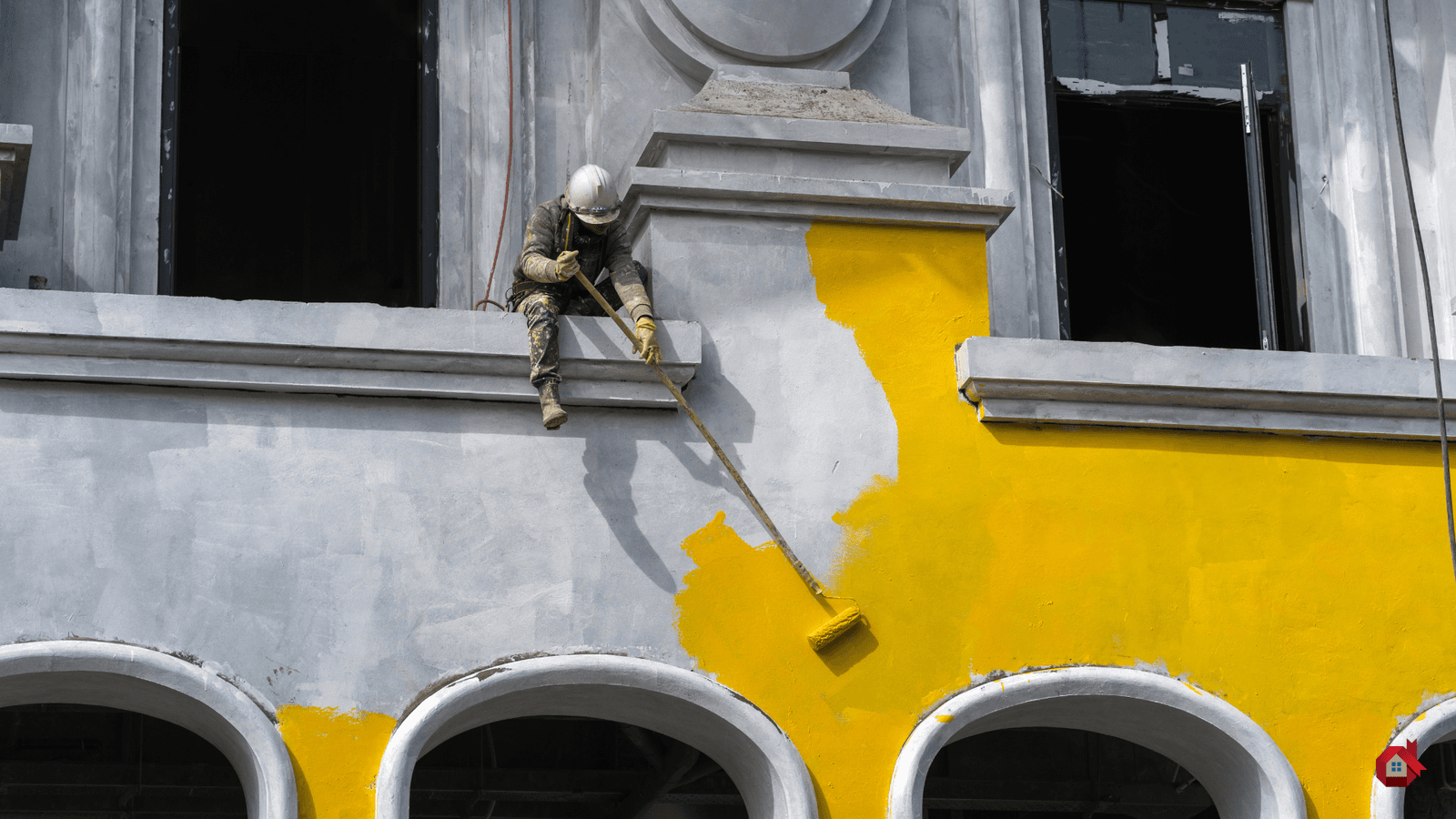
Before deciding what product or coating to use, it’s important to survey the surfaces in question. First, figure out what material is used, and work from there.
Next, determine whether the surface is bare or if it already has a primer. If the surface is devoid of paint, proceed with cleaning, drying, and restoring before applying any sort of paint coat. In some cases, you may need to apply a primer before moving forward with a coat of paint.
There are many different types of undercoats, including primers designed for masonry, wood, and metal surfaces. Here’s some pertinent information to help you choose the right product for appealing results post-revamp:
If you’re working with industrial paint on galvanized metal, note that not all alkyd paints are recommended, instead look for an acrylic primer.
If you’re painting metal, note that metal surfaces should be washed and dried completely before priming.
Also worth noting is that rusted metal needs to be properly treated before anything is applied to its surface. Some products may be applied directly atop rusted metal, but it’s best to strip it clean beforehand.
An industrial wooden surface can be difficult to maintain, requiring yearly upkeep. As a result, we recommend a wood stain that seeps deep into the grain. Note that stains don’t require priming.
What Are the Benefits of Industrial Paint?
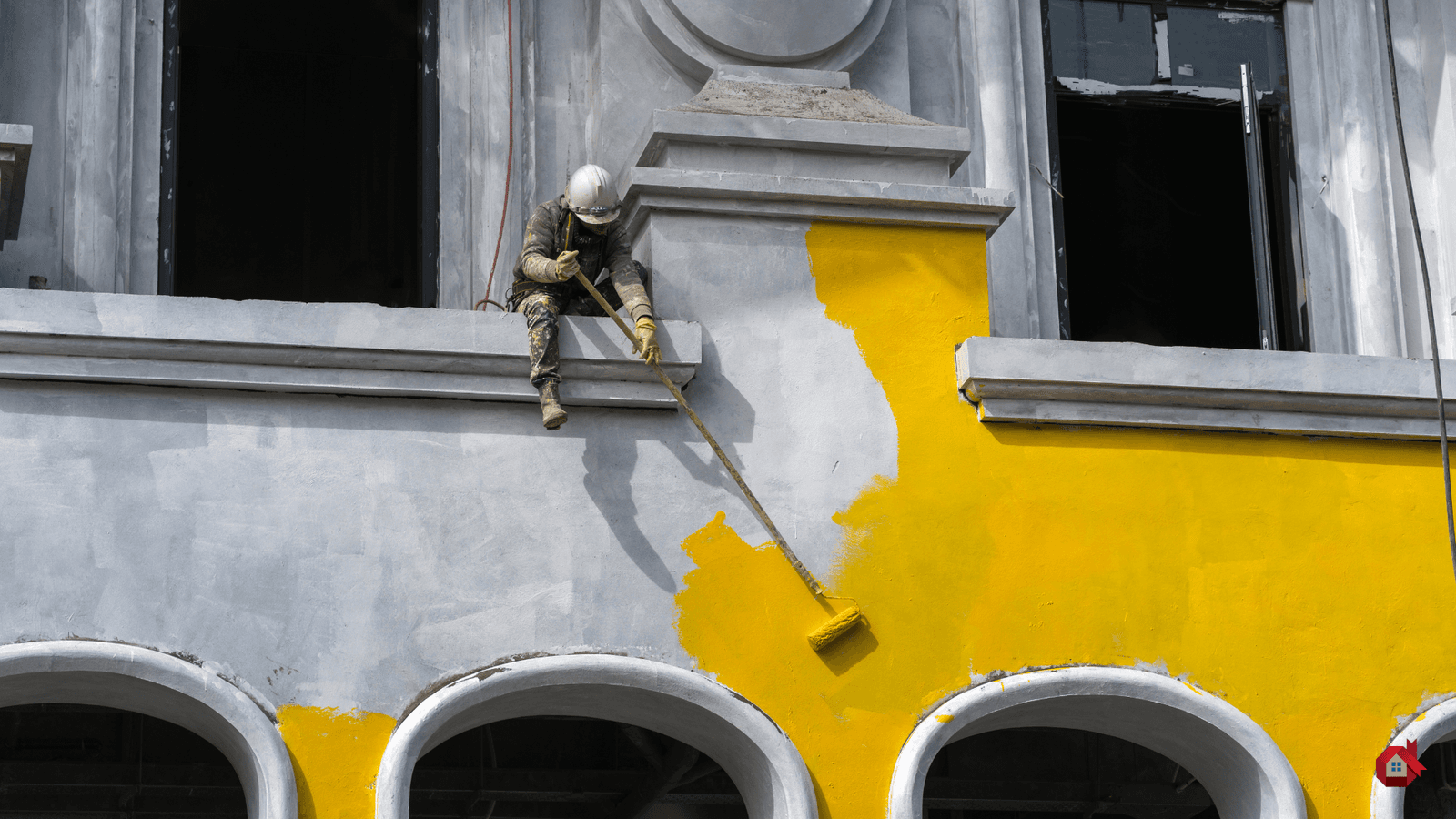
If you need more convincing when it comes to selecting an exterior coating for your industrial building, here’s a quick look into some of the upsides.
Better Protection
Commercial environments are prone to wear and tear. Applying a coat of paint can help prevent damage caused by water, heavy use, or chemical products.
Fireproofing
Depending on what happens inside the industrial building, fireproofing may be fairly important. Protecting your building against chemical fires can be a key to its longevity.
Corrosion- and Rot-Proofing
If you’re working with wooden surfaces, such as loading docks, on or around an industrial building, then rot and decay are common problems. An industrial coating will protect all surfaces from unpredictable weather conditions as well as excessive rain and snow.
Antimicrobial Protection
Industrial coatings and paint provide long-term hygienic safeguarding, including preventing or eliminating pathogen proliferation.
Quick Article Rundown
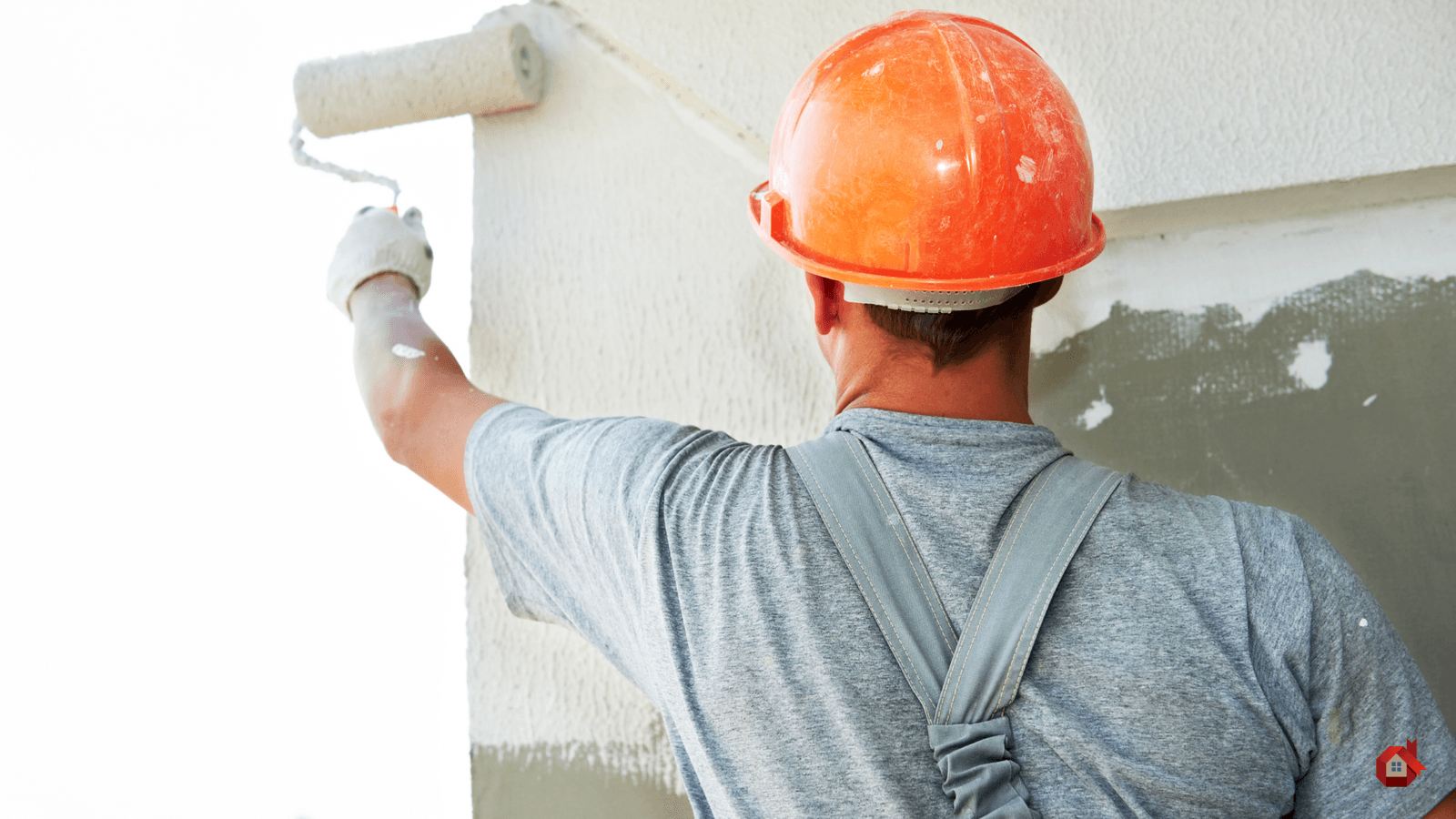
This article served as an overview of coating-specific details; this rundown will help guide you through all the important points targeted throughout.
What to Remember About Siding Materials
Galvanized metal | - Don’t coat in alkyd paint |
Rusted metal | - Remove rust prior to painting |
Wood | - Use a stain that seeps deep into the wood’s grain |
Advantages and Disadvantages of Industrial Coatings
Type of Product | Characteristics |
Epoxy paint | - Cheap |
Polyurethane coating | - Improves durability and wear resistance |
Elastomeric coating | - Good waterproofing option |
Alkyd paint | - Seeps deep into the surface, providing better, flexible bonding |
Want more information about industrial paint and painting techniques? Check out our article What Should You Know About Industrial Paint?
Looking for something else?
Related articles
The latest industry news, interviews, technologies, and resources.
Editorial Team
•21 Jul 2025
Cardboard-backed gypsum boards quickly became a staple in construction due to their ease of use. However, their most well-known downside remains a certain fragility and lack of impact resistance. Fortunately, there are many products available to repair damaged surfaces with a flawless finish.

Paul Riopel
•19 Mar 2026
The renowned DIY projects, varying in complexity but always inspiring, are steadily growing in popularity. While there's something for every taste, furniture restoration projects are undoubtedly among the most appreciated. Whether it's a century-old chest of drawers or a worn-out kitchen cabinet being given a second life, there are plenty of possibilities.
Cynthia Pigeon
•08 Nov 2023
For some people, the prospect of living in a house that is a genuine time capsule is something of a reality. Perhaps you’re one of the many who’ve decided to keep the original retro design going since you’re drawn to its history. However, after a while, your home may need a little tweak here and there.
Léa Plourde-Archer
•23 Jul 2025
Have you noticed a crack in your home's foundation walls? Are you hoping to repair it before it gets worse? RenoQuotes.com has the ideal solutions to renovate your home's foundation.
Editorial Team
•29 Mar 2024
Is your heat pump’s air conditioning function not working? It might not be that difficult to fix. Whether it be a faulty fan or a leaky heat pump, we’re delving into all these malfunctions, and sharing some DIY fixes on the unit itself when possible.