Firewood Types: Is Maple Good Wood to Burn?
By Editorial Team
Updated on June 8, 2026
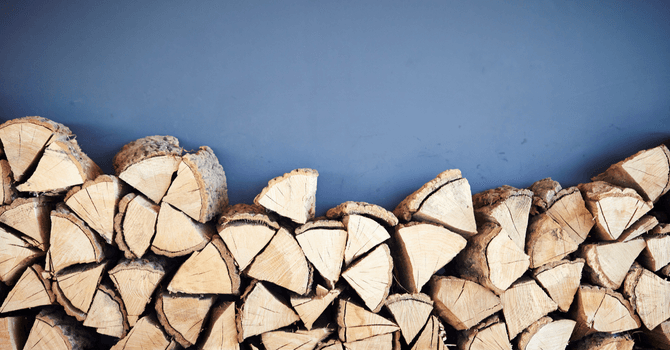
Thinking about buying maple firewood to heat your cabin or house? It’s not a bad idea if you know your maple like a true Canadian. This firewood's quality depends entirely on the type of maple you’re sold.
Did you know that firewood quality can vary from 46% between sugar maples and Manitoba maples? What are the differences between these two types of maples, and how are your heating abilities affected? We’ll explain everything in detail to help you make a well-informed decision.
Maple Firewood Cord: What Are Its Characteristics
You can find good firewood cords of maple, beech, and wild cherry in stores. This combination is known as a Category 1, meaning it’s top-of-the-line. Here are the characteristics unique to this sort of wood bundle:
12–15-inch long logs (30–38 cm)
15% moisture
25 million BTU/cord
Heating value 20–30% higher than other wood species
Let’s take a closer look at the heating value index unique to the three tree species mentioned above:
Maple: 29 million BTU/cord
Beech: 27.8 million BTU/cord
Wild cherry: 26.2 million BTU/cord
The heating value of those three species should be 27.6 million BTU/cord, instead of 25 million. Why the discrepancy?
This difference is simply due to market realities: a cord of wood naturally contains empty spaces between the logs (you never buy a 100% solid block of wood!) and the proportions of the mix vary from one batch to another.
However, to maintain this 25 million BTU performance, you need to make sure you are getting the right type of maple. Be careful: if a supplier replaces sugar maple with a lower-quality variety, those numbers will plummet. What are the differences between these types of maple? That is exactly what we are going to look at in detail.
The Different Types of Maple Firewood (Ash, Silver, and More)
There’s not just one type of maple, but four. Every tree produces a wood with a different heating value as detailed below:
Acer saccharum (sugar maple, hardwood maple): 29 million BTU/cord
Acer rubrum (red maple, swamp maple, water maple): 24 million BTU/cord
Acer saccharinum (silver maple, creek maple, silverleaf maple, soft maple, white maple): 21.7 million BTU/cord
Acer negundo (boxelder maple, Manitoba maple, ash-leaved maple): 19.3 million BTU/cord
Now you see why the 'Category 1' designation is so important. If your bag contains genuine sugar maple, you get the best possible efficiency, and the 25 million BTUs on the label are simply explained by the natural air gaps between the logs. On the other hand, if an unscrupulous seller replaces sugar maple with silver maple or Manitoba maple, the actual heating value of your cord will plummet well below what the label promises.
In Quebec, a standard 1,000 sq. ft. (92 m²) well-insulated home requires roughly 30,000 BTUs per hour to maintain a temperature of 20°C (68°F) during extreme winter cold. Depending on the variety of maple you are sold, your wood supply could disappear much faster than expected. Learning how to tell them apart is the best way to avoid freezing this winter... and to keep your hard-earned money from going up in smoke!
Red Maple or Sugar Maple: Which Is the Better Firewood?
Maple wood has a good heating value, but as mentioned, not all maple wood is the same.
The sugar maple is way ahead of its firewood pact. Hence, lumber professionals, such as Sandie Taillefer, Bois de foyer Rive-Nord, didn’t hesitate to say that, “Maple is considered a better firewood compared to other wood species.” (Quote translated into English by RenoQuotes)
Indeed, behind the sugar maple, there are no less than 29 species of firewood, providing inferior heating values.
The sugar maple has a mere four competitors:
Cork elm (Ulmus thomasii): 32 million BTU/cord
Shagbark hickory (Carya ovata): 30.6 million BTU/cord
White oak (Quercus alba): 30.6 million BTU/cord
Bitternut hickory (Carya cordiformis): 29.2 million BTU/cord
However, wood with a higher heating value can actually be a way of saving money.
What Is the Best Wood for Firewood in Canada?
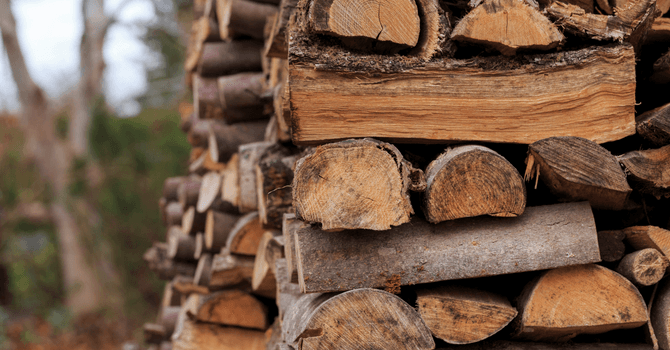
Category 1 includes firewood from species such as maple, beech, and yellow birch. Category 2 includes species such as ash or black cherry (also known as wild black cherry).
A Category 2 cord, made up of white ash (Fraxinus americana, 25 million BTUs/cord) and black cherry (Prunus serotina, 23.5 million BTUs/cord), will yield an average energy output of about 24.3 million BTUs.
Do the math: if your firewood comes from lower-quality maples like silver maple (21.7 million BTUs) or Manitoba maple (19.3 million BTUs), a good Category 2 cord will actually be much more cost-effective and productive than a low-end maple blend!
Maple Tree Firewood Pricing Examples
Maple firewood is often sold with beech and wild cherry wood. Prices range from $100 to $200 per cord, depending on the seller.
Some retailers even sell birch for $120 to $160 per cord. However, this wood’s heating value is limited to 23.4 million BTU.
To proceed cost-effectively, find a retailer that can sell you sugar maple cords combined with less effective wood cords. Below is an example of two opposites sold by the same retailer:
1 cord of 16-inch maple logs: $120 to $170
1 cord of 16-inch pine logs: $70 to $90
The average heating value of these two types of wood combined allows you to achieve an average heating capacity of 21.7 million BTUs per cord (that is, 29 million for maple and 14.5 million for fir).
Naturally, pine is a softwood, meaning that it burns very fast and produces less heat than maple wood, which is a hardwood. This is exactly why it can be highly valuable paired with maple wood.
During cooler days, you can use pine wood, and during colder days, you can use maple wood to produce more heat, faster.
Is Maple Wood Good for Firewood?
Maple firewood has exceptional characteristics when it comes to its heating value. While it’s heavier than other species, it will heat your home during wintertime just fine.
The only thing to look out for is that you’re purchasing sugar maple. Otherwise, you’ll be using wood that’s barely better than black cherry (Prunus serotina), and maybe even worse than red pine (Pinus resinosa) if you purchase boxelder maple.
FAQ
How long does maple firewood take to dry?
As a general rule, hardwoods, such as maple and oak, take longer to dry, even under the best of circumstances. Softer wood, such as poplar, tends to dry faster. Note that people have noticed that wood dries faster when stacked in single rows, exposed to both the sun and wind.
Looking for something else?
Related articles
The latest industry news, interviews, technologies, and resources.
Editorial Team
•21 Jul 2026
As colder weather approaches, it is a good time to prepare your property for the months ahead. Early planning for insulation, roofing repairs, and heating upgrades can help prevent last-minute problems once temperatures drop.
Editorial Team
•07 Apr 2025
Are you looking for an efficient and discreet solution for your home's thermal comfort? The ducted heat pump is a high-performance option that ensures optimal comfort throughout the year. Unlike wall-mounted models, it is integrated into ventilation ducts, making it virtually invisible. How does it work, and what are its advantages? Here’s everything you need to know about this system to make an informed choice!

Editorial Team
•08 Nov 2023
RenoQuotes.com followed home renovation contractor Ali Nazar on the job at the site of a basement renovation project in Montreal. Check out this interview to know more about the subject of basement renovations.
Cynthia Pigeon
•30 Apr 2026
In 2026, the cost of building a detached garage in Canada typically ranges from $35 to $65 per square foot for a traditional wood-frame structure, and $12 to $25 per square foot for prefabricated models. For a standard single garage, expect a total budget between $30,000 and $55,000, including the concrete slab and basic electrical installation. Costs vary depending on materials, municipal permit fees, and local building code requirements.
Editorial Team
•17 Dec 2024
If you’re looking to let a little bit of light in between two otherwise dull or dingy rooms, or you’re looking for an alternative to the classic sliding door, then you might be in the market for French doors. These doors can be a beautiful addition to both classic and modern home décors.