What Is the Difference Between French Drains and Other Residential Drainage Systems?
By Editorial Team
Updated on April 10, 2025

In a fictional world made up solely of residential drainage solutions, the French drain is the epitome of all systems, distinguished by its features and efficiency. This article will focus on the key differences between a French drain and other commonly used home drainage solutions. Understanding the differences is crucial to efficiently manage water around the perimeter of your home and prevent moisture problems. Uncover which drainage system best suits your residential needs.
The Basics of Residential Drainage
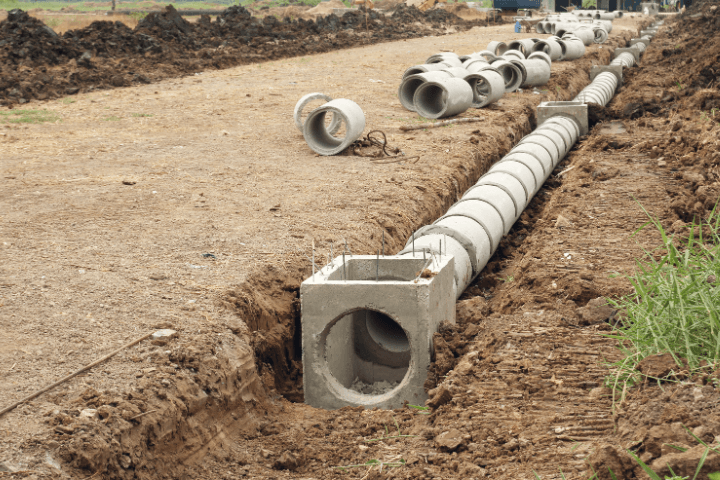
The Purpose of Drainage
Installing a French drain has a single purpose: to redirect stormwater away from the perimeter of a structural foundation. However, this type of drainage system prevents several other negative ramifications to your home’s foundation:
Water infiltration
Mould
Cracks
Hence, a French drain is indispensable for maintaining a structurally sound foundation.
What types of drains are most used for homes?
Foundation Drain
Foundation drains come in twos:
French drain
Interior drain
In either case, it’s an underground drainage system levelled with the foundation’s footing. A French drain is installed along the exterior foundation wall, whereas an interior drain is located directly beneath the concrete slab, alongside the interior face of the foundation wall.
They both serve the same purpose: redirecting water beneath the house to prevent stagnant water build-ups, thereby protecting the house’s structure.
Percolation Trench
It's a trench that's excavated from the dwelling to a sump pit or septic tank. It’s also connected to the property's gutter system, allowing water to be evacuated far enough away from the foundation.
To prevent flooding, the percolation trench, which lines the structure in a downward direction, redirects stormwater from the gutters away from the property.
Storm Drain
A storm drain is typically U-shaped, sometimes V-shaped, and channels water toward a sewer system. It’s often covered by a plastic or steel grate that allows a pedestrian (plastic) or vehicle (steel) to cross over.
A storm drain will often be installed to redirect stormwater away from a garage or deck.
Floor Drain
Not as commonly used, but especially practical in the event of a water heater leak. Floor drains are installed in the floor to drain water in the event of a water heater break.
Instead of having extensive water damage, the floor drain will channel the water directly to the sewers. Thanks to such a drain system, the only problem you’ll have to worry about is figuring out how to fix your water heater.
To prevent foul smells emanating from sewers from filtering through your home, this type of drain has a trap which you can regularly fill with water.
Roof Drain
A roof drain, connected directly to your home’s pipework, is a feature on all flat roofs. As such, stormwater channelled through this system is redirected toward the sewers instead of stagnating on the rooftop.
To maintain a functional drain, you have to regularly clean the stainless steel grate that protects the pipe's opening. Neglecting to do so could prevent water from draining properly and damage the roofing, subsequently resulting in water leaks.
Underground Drainage: The French Drain
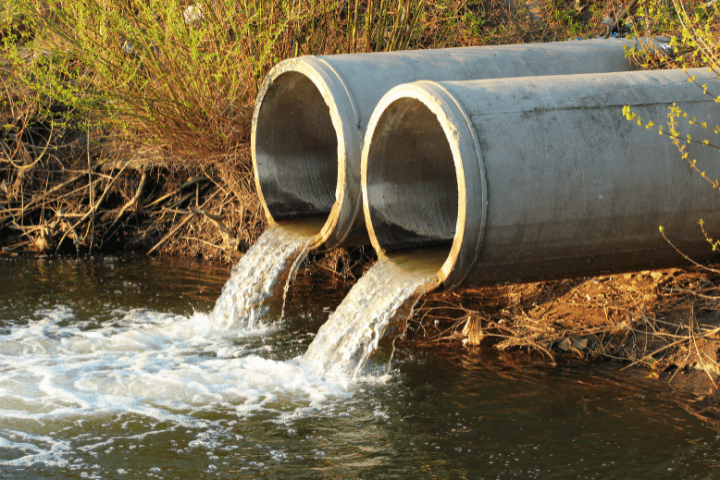
What is a French drain?
A French drain is nothing less than a sloped trench in which a perforated pipe is laid, covered by a geotextile membrane and gravel.
It has a pretty straightforward purpose: It channels water, due to gravity, away from your property or foundation to a far-away area.
This drainage system allows your yard to dry faster and prevents stagnant water-related issues. The French drain is so efficient that it has been mandatory for all constructions in certain Canadian provinces, such as Quebec, since 1955.
5 Benefits of a French Drain
Prevents leaks resulting from water build-ups
Prevents moulding
Avoids putting pressure on the foundation
Mitigates the risks of cracks
Redirects water to a specific area
How to Build a Surface Drain for Your Home
As we already mentioned, installing a French drain has been made mandatory by select provincial Building Codes. The regulation also states that the French drain must be positioned beneath the concrete slab. The only issue with this practice is, according to the APCHQ (Quebec’s Home Builders’ Association), that it’s counterproductive as it allows water to pool beneath the slab.
Therefore, a French drain must be installed at the base of the footing and adhere to the following characteristics:
Minimum diameter: 4 in (100 mm)
Protective layer: 6 in (150 mm) of crushed stones (or clean gravel)
Backfill devoid of pyritic shale or crushed stones smaller than 5/32 in (4 mm)
To prevent soil or crushed stone particles from penetrating the drain pipe, we suggest covering it with a filter fabric.
The pipe’s end that happens to be positioned at the bottom of the slope must be connected to either a stormwater sewer or a sump pit (which is eventually channelled into a septic tank).
Also, note that if your home is built on humid ground, you’ll need to add lateral drains beneath the concrete slab. These drains will prevent water from building up under the slab, creating a hydrostatic pressure capable of damaging the slab’s structure.
Lastly, let it be said that the pipe used for drainage doesn’t have to be made of stainless steel. It can be:
Terracotta
Corrugated plastic (agricultural drain)
PVC (BNQ drain)
How much does it cost to install a French drain system?

Consider either of these two situations:
The drain is installed with the foundation
The drain is added or replaced thereafter
How much is it to add drainage to land with a foundation?
Between $1,000 and $10,000. The gap may seem rather substantial, but note the characteristics of your property:
Surface
Complexity (e.g. slope of the land)
Drainage type
Labour
For example, if you’re building a French drain in a phreatic-adjacent zone, you’ll have to hire an experienced professional. In other words, an engineer. The reason for that is simple: A French drain won’t suffice to fix moisture-related issues.
How much is it to repair an exterior drain?
French drains won’t last forever. After a few decades of channelling stormwater, the drain may clog as a result of a build-up of solid particles or tree roots.
Such unfortunate occurrences will happen roughly 25 years after it’s originally installed, which happens to be the service life of a drain. If your home is rather old, it’s highly likely that the stainless steel pipe that was installed was never protected by a geotextile membrane. For homes built before 1960, it may be even worse. You may simply not have a drainage system. In such a case, putting in or renovating a French drain next to an already-built structure will cost between $15,000 to $24,000. Is it worth the money? The answer is yes, as moisture from the foundation will result in the following:
Mould-covered walls
Water-marked floors or slab
Rotten framework timber (wood in direct contact with the slab)
Efflorescence on foundation walls
For more information, check out our article When Should You Replace a French Drain?
French Drain vs. Other Systems
Understanding the difference between a French drain and other residential drainage systems is crucial to effectively managing water surrounding your home. The French drain, with its tailored design and ability to channel water away from structural foundations, is a one-of-a-kind solution to mitigate moisture and soil saturation issues. Generally speaking, choosing the right system means considering your land’s specificities, climate inherent to your area, and water drainage challenges. By selecting a drainage system tailored to your needs, you’re further ensuring the durability of your home, as well as your safety, by preventing moisture-related or water infiltration problems.
Get 3 quotes for your renovation project
RenoQuotes.com can help you get quotes from a general contractor. By submitting your project, we’ll put you in contact with top-rated contractors. Fill in the form on the homepage (it only takes a few minutes) and get estimates from trusted professionals.
Dial 1-844 828-1588 to speak with one of our customer service representatives.
Looking for something else?
Related articles
The latest industry news, interviews, technologies, and resources.

Editorial Team
•03 Nov 2025
Among the many renovation projects out there, painting projects are most accessible to apprentices in the industry. Indeed, painting is part of our daily lives and few are those who can ever say they've never been called to lend a hand to change the appearance of one or more rooms inside a home.
Editorial Team
•09 Aug 2024
Gutters play a vital role in protecting homes by channelling rainwater efficiently. Among the different materials retailed, copper eavestroughs stand out on account of their durability, aesthetic, and performance. This article will guide you through a copper gutter comparison, detailing benefits, the installation process, and maintenance steps to answer any and all commonly asked questions on the subject matter.

Équipe éditoriale
•08 Nov 2023
It’s difficult to deny that as soon as the chilly weather arrives, rushing to the thermostat to crank up the heat seems like the only way to keep the inside of the home warm and comfortable. What you may not realize is that even if your heaters are on full blast, the indoor temperature will only stay cosy if your home is insulated correctly.

Editorial Team
•11 May 2026
Both a place of rest and relaxation, the gazebo allows you to enjoy beautiful weather without fear of suffering the negative effects of too much sun. The gazebo offers shaded space that is difficult to do without, and this is why more and more homeowners are choosing to install it in their backyards. Are you also thinking about it? To learn more about this type of shelter, read on!