Materials and techniques to insulate an attic
By Editorial Team
Updated on June 16, 2025
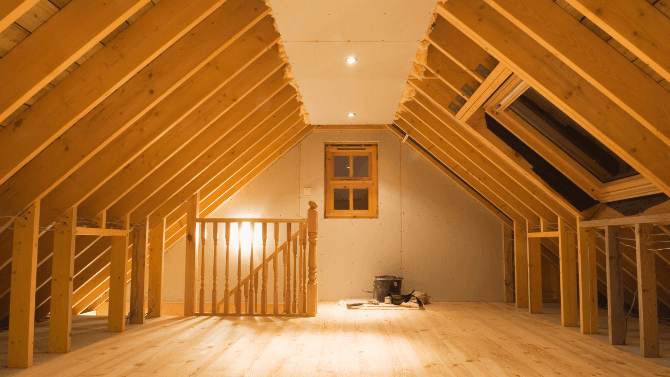
It goes without saying that no one likes to feel cold inside their home, especially when winter knocks on our doors. As insulation in the attic is critical to the preservation of a comfortable indoor temperature, it is important to understand which materials and techniques need to be used to ensure that it is optimal.
The consequences of a poorly insulated home
Being below the standard rate of an R-factor of 30 is not only considered to be inadequate for the overall comfort level of the home’s occupants but during winter it also dramatically increases the amount of heat needed to stay warm. This will greatly affect the temperature of the main floor of the home during winter. The reason is very simple: as we all know, heat travels upwards, so if the floor of the attic is not well insulated, heat will easily escape from the room.
If you find it to be very cold in your home, even when the heat is constantly active, it would be time to look into your attic in order to decide if this is the source of the problem. Checking your insulation is simple. Using a flashlight, look through the cracks to know the number of insulation layers present. Only then will it be possible to estimate the R factor as a result of the thickness of your insulation.
Insulating your basement floor is also an important factor to consider. Read more on basement floor insulation in our article.
Cellulose fibre: an insulation material that is well-adapted for attics
Cellulose fibre is a type of insulation that is highly recommended because of its attributes. This material is made from recycled and shredded paper or from wood fibre, to which other materials have been added to prevent it from being flammable. Fibre also serves as insulation against noise. This type of insulation is available over-the-counter in large plastic bags. The number of bags required will have to be calculated to reach the desired R factor, and will directly depend on the number of square feet without joints since the cellulose fibre is able to infiltrate everywhere.
Moreover, working with cellulose fibre is a very eco-friendly option for a multitude of reasons. First, improving the insulation level of a home is always a good choice to make the building more environmentally friendly. A well-insulated house, in addition to keeping heating costs down, generates less energy loss. In the same manner, it contributes less to greenhouse gases. When compared to other insulation materials, cellulose fibre offers a slight advantage because of its previously mentioned attributes.
The cellulose fibre application process to insulate your attic
source: unsplash
Go down to your local hardware store and grab a bag of cellulose fibre to get started. For the application of this fibre, it is necessary to use a machine designed precisely for the job. At the base level, the machine itself is very expensive.
However, it is common for renovation and hardware stores to loan this machine for a period of 24-hours, free of charge. To install this fibre, you will need the help of another person. The first person should be stationed in the attic, and it is they who will apply the fibreglass using the pipe of your newly acquired machine.
Due to the phenomenal weight of the machine, the other person will have to be outside the house, and their task will be to empty the cellulose bags as they fill. The attic will also need to be well-lit to ensure that the insulation product is properly applied. To be well protected, goggles, protective gloves, a dust mask and a tape measure should be used. The application does not require serious attention to detail, it suffices to blow a more or less equal amount of insulation throughout the attic floor.
What is the price for attic insulation?
A bag of cellulose insulation material, priced at about $15 to $17, covers about 15 square feet with a level of R-50. If current standards are followed, insulating the open area of an attic (not including the price of materials) will cost $0.50 to $4 per square foot.
Source: Amerispec, home inspection service (prices are indicative and subject to change)
Other materials to insulate an attic
In the previous paragraphs, we mainly talked about cellulose fibre as a material for insulating the attic. However, it is not the only insulation product that can be used in this part of the house.
In addition, there are also several installation techniques, including installation on the attic walls or on the floor. In general, the materials that will be placed on the walls are sold in the form of a mat or mattress, while those on the floor can also be sold in bulk (including cellulose fibre). So here are different insulation materials that can be used in an attic (besides cellulose fibre):
Mineral wool
Fibreglass
Expanded cork
For more information about attic insulation, check out these articles :
For installation advice, consult the manufacturer's instructions. In addition, if from the start your attic was not insulated at all, don't forget to install a vapour barrier which will play a very important role. In any case, it is strongly advised that you hire a specialist for help as you select an insulation material, as well as a top-quality installation process.
Looking for something else?
Related articles
The latest industry news, interviews, technologies, and resources.
Editorial Team
•20 Nov 2023
In light of the COVID-19-induced sanitary crisis, traditional office space maintenance, which ultimately consisted of vacuuming, wiping down surfaces, washing windows, and emptying trash cans, has since been completely overhauled.
Editorial Team
•06 Jul 2025
Every self-build project inevitably begins with the following question: how much will it cost? It’s nearly impossible to set aside this important consideration.
Cynthia Pigeon
•08 Jul 2026
In 2026, replacing a concrete slab and pyrite-contaminated backfill can represent a significant budget. For a basement, some estimates range from around $15,000 to $40,000, while a garage can cost several thousand dollars, depending on the surface area, access and the extent of the removal required. This price includes the full excavation of the contaminated backfill, its replacement with tested non-expansive crushed stone and the pouring of new concrete. Before undertaking this major work, an official technical test following the CTQ-M200 protocol is often required by financial institutions or during a real estate transaction to assess the swelling index.
Editorial Team
•08 Nov 2023
This type of paint is often still linked to large-scale projects. However, nowadays, painting the whole inside of a house is nothing compared to what it was back in the day.

Editorial Team
•08 Nov 2023
The sets of your favourite films can sometimes serve as an inspiration to transform your interior decor. Whether a period piece, a 1960s inspired environment or a more modern layout, there is always room to draw inspiration from these much-loved stories.